Interviews 2026 (57-64):
Hand, Buchinger, Winston, Zhuang
________________________________________________________________________________________
The Shore Interview #57: Aaron Tyler Hand
Questions by Ella Flores, Interview Editor
EF: Aaron, congratulations on your debut poetry collection, Floodchaser! I will gladly admit that this was a difficult book for me to put down. Even when a poem hit me in the gut, I just kept finding myself coming back for more. One of the joys I found in this book was your ability to cohere a poem titled, “Self-portrait as combination Taco Bell/Pizza Hut/KFC” (which includes a reference to Fall Out Boy), in the same collection that includes a bulk of cabin-feverish poems from the perspectives of people living on Noah’s ark. What did your process look like for sussing out which individual poems felt productive when placed alongside a tighter series? Were there any individual poems you remember being an instant “eureka!” or ones that took more convincing?
ATH: Thank you so much, I really appreciate the kind words. It takes a lot of work to put together a collection and even more to get it into the world, so hearing that it’s resonating with people means a great deal to me.
The book took many different forms over the years. Early on, it was essentially two separate projects: one centered on the Noah poems and another on the more contemporary pieces. When I shared the Noah manuscript with a mentor, they encouraged me to expand it—to bring in another voice or perspective that could sit in tension with those poems and deepen what they were doing. That idea stayed with me and I started treating the manuscript more like a puzzle, experimenting with how the contemporary poems might speak to and complicate the Noah sequence. It took a couple of years of editing and rearranging before the sections began to feel like they were in real conversation with each other.
One eureka moment came when I decided to open the book with “Predictions from a Goose Bone Prophet.” In a collection so invested in the Old Testament story of Noah, it seems obvious in retrospect to begin with a poem whose first line is “in the beginning,” but it took me a while to arrive at that. Now it’s hard to imagine the book starting anywhere else.
EF: For my second question I want to pivot to your poem that appears in our latest issue, “Mirror Lake, Oregon.” There’s this overarching thread of language being tangled with loss—from the Latin name of a winged ant, to its “legs twitching/ like an s.o.s,” to the final contemplation on the translatability of loss. Are there specific occasions, locations, or mental states that you have found facilitate a reflection on language? And what are ways you nurture that reflection into a potential poem?
ATH: I tend to become most aware of language in moments where it feels insufficient. Places like Mirror Lake are conducive to that because they sit in this tension between beauty and intrusion. You have the natural world, but it’s never untouched; there’s noise, there are people, there’s whatever you’ve carried there from elsewhere.
In that poem, I was thinking about scientific classification as a way of trying to stabilize something that is already slipping away. The winged ant becomes this kind of hinge between systems of knowledge and the immediacy of witnessing something die. And neither language nor observation quite resolves that.
As for nurturing that into a poem, it started with a question that I couldn’t answer cleanly. I tried to stay with that uncertainty rather than resolve it too quickly. The drafting process became less about explaining the experience and more about layering pressures around it (images, shifts in scale, interruptions) until the poem can hold the tension without needing to solve it.
EF: From your time in the MFA program, to your work in the carceral system, or your hosting of the Personhood Project Podcast, how do you see access to digital spaces broadening, or perhaps changing, the exposure of poetry and poetry education? And do you see any new tensions arising between different modalities and spaces?
ATH: Digital spaces have made poetry more porous. There are fewer barriers to encountering work, to sharing it, to building communities around it. I’ve seen that firsthand through things like podcasts and online publications, where conversations about poetry can reach people who might not otherwise step into a workshop or a reading.
But that increased access also changes the conditions under which poems are read. There’s often an emphasis on speed and visibility, how quickly something can circulate, how easily it can be excerpted or understood in isolation. This is especially true in the age of Instagram poets. These poems can sit uneasily alongside poems that are interested in ambiguity or that require time to unfold.
In my experience teaching and working in carceral spaces, the lack of digital access can actually foreground the value of slowness and shared attention. When you don’t have an endless feed, the poem in front of you carries more weight. The discussion around it becomes the primary mode of engagement.
So, I think the tension isn’t necessarily between “good” and “bad” modes of access, but between different temporalities. Poetry has room for both, but it’s worth being mindful of how those conditions shape what gets written, shared and remembered.
EF: Are there any journals or magazines you're currently enjoying?
ATH: There are so many amazing journals and lit mags out right now, which makes it so hard to just name a few. So I apologize in advance for any that I’m not naming here.
I feel like I have to shout out Buckman Journal. Being based in Portland, it’s especially exciting to have a journal like that in the local scene. The work they publish feels alive to place and community, but it never feels insular. There’s a lot of care in how each issue is put together, and the pieces tend to feel both accessible and formally interesting in a way that keeps me coming back.
I’ve also been reading Bat City Review quite a bit. They consistently publish work that feels adventurous without losing its emotional center. There’s a lot of range in what they take on, but it never feels scattered, just really well curated. I always come away from an issue feeling like I’ve encountered something new.
And even though they focus on prose, I’ve been really into Hex lately. I try to read across genres as much as I can, and they’re putting out some sharp, memorable work. The pieces often have this quiet intensity to them that sticks with you, and reading it has definitely influenced how I think about structure and pacing in my own writing.
EF: Please speak to how two poems in this issue of The Shore (not including your own) are in conversation with each other.
ATH: What struck me right away about “Hoof Fungus” by Becki Hawkes and “genesis throne feedback” by Dennis Hinrichsen is how differently they approach the idea of form and becoming, while still circling a similar unease about what it means to be alive inside a body or a system.
Hawkes’s poem feels grounded in the natural world, but it’s not exactly pastoral. There’s this slow, almost reluctant attention to decay (“not dramatically / but listlessly”) where growth and death are happening at the same time. The fungus isn’t traditionally beautiful, but once it’s named, it becomes something you can’t stop seeing. That act of naming feels important, like it reshapes perception, even as everything around it is breaking down.
Hinrichsen’s poem, on the other hand, feels much more abstract and associative, moving through these fragmented, almost surreal images of early formation (“that was my first / form”). It’s less anchored to a single environment and more concerned with systems, language and perception. But there’s still a similar instability there, a sense that identity is provisional, always shifting, never fully settled.
I think the two poems come into conversation through that shared tension between recognition and disorientation. In Hawkes’s poem, naming gives you a kind of foothold in a dying landscape, even if it doesn’t stop the decay. In Hinrichsen’s, language feels more slippery, something you’re testing, pressing “magnets / tight to their polarities,” trying to understand how meaning holds or ricochets.
Both poems seem interested in how we come to know the world, but neither one offers that knowledge as stable. Instead, they leave you in a space where attention itself becomes the thing that’s alive, even when everything else feels like it’s slipping.
________________________________________________________________________________________
Aaron Tyler Hand is a creative writer and literary critic with an MFA in creative writing from Texas State University. His debut poetry collection, Floodchaser, was the winner of the 2025 Catamaran Poetry Prize and is due out April 2026. His work has appeared in Attached to the Living World: A New Ecopoetry Anthology, Poem-a-Day, Texas, Being: A State of Poems, San Antonio Express-News, Gasher Journal and elsewhere. You can hear him talk about poetry on The Personhood Project podcast and keep tabs on his future publications at www.aarontylerhand.com.
________________________________________________________________________________________
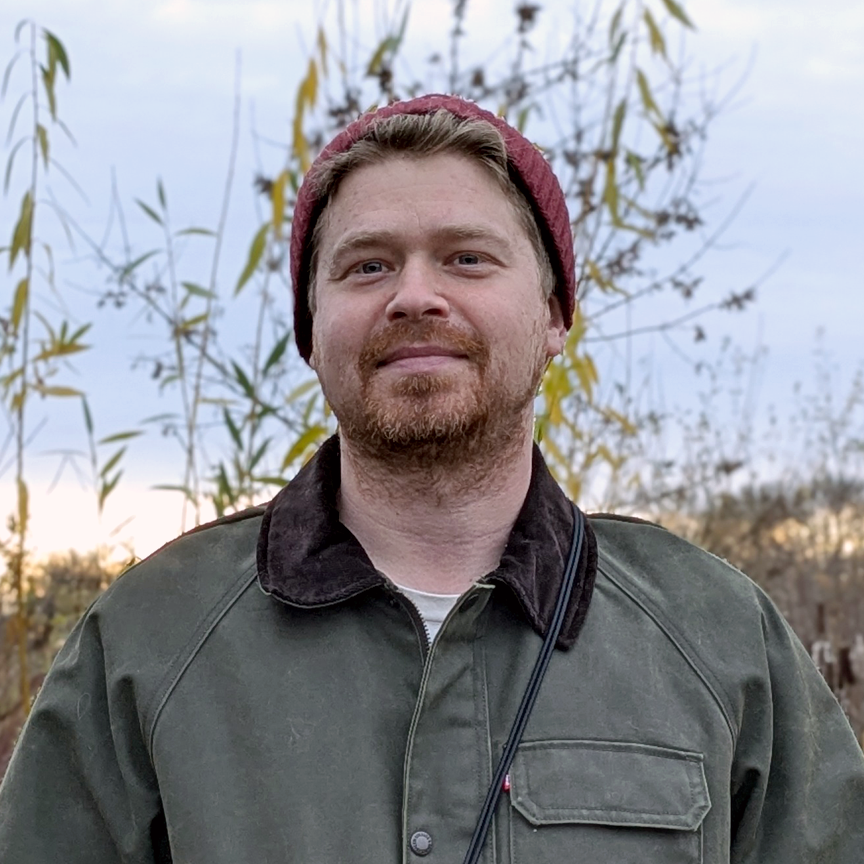
Aaron Tyler Hand
________________________________________________________________________________________
The Shore Interview #58: Mary Buchinger
Questions by Ella Flores, Interview Editor
EF: Hi Mary, I’m so excited to have this chance to ask you these interview questions! To start off, I’d like to ask about your poem, “Librarie Jules Vernes, Paris,” specifically this bold move that you pull off beautifully in the opening of the poem where the only use of a parenthetical in the entire poem happens right in the second and third lines. As the reader enters the titular space, this move lifts the veil of the voice to reveal layers of associations and history that the voice is bringing into the space they enter. Here, it is Rilke’s work (is it Minot the cat?) but in a larger sense, can you take us through the process of when and how a craft choice like this feels like it works and are there similar moves you’ve considered like this but perhaps ultimately decided against in other work?
MB: The bookshop is real. Moments before walking in, I’d read (and taken a photo of!) a passage displayed on the wall of Shakespeare & Company, a much more famous Paris bookstore around the corner; it said: “Rainer Maria Rilke wrote about the little shops in the latin quarter, their windows filled with old books & etchings. Where nobody seemed to enter and the proprietor could be seen reading peacefully, indifferent to worldly success. Beside him lies a dog or perhaps a cat.” Having just read this description, I walked into this dusty, dim bookshop, the only light coming from the narrow space of the partly closed door to the street behind me. The room overflowed with books—on the floor, on tables, on shelves. Eventually, I spotted the proprietor at the back, perched on a stool, scrolling on her phone, seemingly unaware of my presence. Clearly this was one of Rilke’s bookshops, so where was cat?
As you suggest, Ella, I really did want to try to represent the experience of walking into this place and the upending of my expectations of a bookshop as an orderly place with a solicitous bookseller. And yes, our experience is always layered; so many instantaneous sets of thoughts and impressions. I struggle with this a lot in my work because I am particularly interested in the layers. Nothing is as it appears of course because ‘appearance’ itself is a construction that’s informed by what’s happened to us, what people have said to us, all the different things we’ve read, how we are feeling physically and emotionally, what we dreamt about the night before, etc. etc.—so much is happening all at once and how to bring that into poetry, to represent, in some way, the many, many layers, remains an invigorating challenge.
EF: As a follow-up to my previous question, your poem reckons so much with layers of time and language, and our corporeality through them. Words, for the poem, “rise / like bubbles from the boil” and are left to “mold / in this marooned room.” By the end of the poem, the “I” includes itself with the voices in those books, leaving the reader with a dual question and statement of “How else to tell our time / to strangers.” I could go on about how the lack of periods and other craft choices lend themselves to this continuous cycle of creating and receiving language. Whether or not this poem comes from a lived experience, can you tell us about your own experiences contemplating the price of “paper and imagination,” or your thoughts on the importance of spaces dedicated to this interaction of reader and writer?
MB: Thank you for this question! Near the bookshop is another storefront with this quote from James Baldwin displayed in the window: “You think your pain and your heartbreak are unprecedented in the history of the world, but then you read. It was books that taught me that the things that tormented me most were the very things that connected me with all the people who were alive, or who had ever been alive.” And so, I also carried Baldwin’s words with me into this space, thinking about all these books so casually strewn about the room, these waves of books at my feet, cascading off the tables, shoved into the shelves, in this dark, musty room, and yet, each book I opened had a price neatly written in pencil in the top right hand corner of the first page. All the books were hardcover, who knows how old, many bound in leather, gilt covers—they were beautiful material objects—but as a writer, I know what it takes to fill those pages with something meaningful and I found myself identifying with the authors, and thinking about my own books in closets and on bookshelves, and just what it means to have a writing life, a life that takes you beyond your own time, and then too, to think about a monetary value placed on this. Baldwin reminds us that we really only understand our life through the lives of others and that through reading we find that our own experience is both extraordinary and not—I was surrounded by accounts of lived lives, my own playing itself out among them!
In writing this poem, I found myself hesitant to use periods because it doesn’t seem like there is a full stop anywhere, as I am scanning the books and feeling very curious but also not knowing any French and not wanting to bother the proprietor who seemed annoyed at my having walked in—there was a kind of flow of emotion that I hope to capture with the form. The other images swimming around in my mind were those called up by the name of this bookshop, Jules Verne—I’d read Twenty Thousand Leagues Under the Sea and had seen the movie as a child and so, of course, I felt I was in the depths of something strange, books lapping against my feet, serpentine piles all around, it seemed a bit possible for me to drown in that place of words and time.
EF: I am so intrigued about your PhD in linguistics and how you ended up in teaching at the Massachusetts College of Pharmacy and Health Sciences! Can you tell us a little about what your primary focus was for your PhD? How have you seen the field change over time since your degree, if at all? And lastly, what unique perspective or tools do you see the study of linguistics as being potentially invaluable for a poet?
MB: For my dissertation, I studied classroom discourse; specifically I was interested (and continue to be!) in how, through conversation and working with materials, we construct an understanding of something complex. I studied interactions where children and adults were learning about buoyancy (funny to think about that in relation to Twenty Thousand Leagues Under the Sea!). Initially I studied linguistics because I’ve always been interested in language and it seemed somehow more practical than studying English literature, because, of course, linguists have more job opportunities than English majors… I’m not sure how my study of linguistics influences my writing, but I loved learning about the different elements of language and have always been especially fascinated by the sounds of words. As a sociolinguist, I am deeply interested in the power of words and word choices and try to remember and also encourage my students to consider the range of possibilities and the implications of communication for creating connection (or disconnection) and community, and, fundamentally, for changing the world.
EF: Are there any journals or magazines you're currently enjoying?
MB: Lily Poetry Review is one of my favorites— the newest issue is stellar, edited by Jennifer Franklin. I also enjoy reading Ibbetson Street, which is a local Boston-based poetry journal edited by Harris Gardner and Doug Holder. Public School Poetry is super cool—I love how poets engage with other poets’ work as they randomly assign each contributor to write a ‘five-paragraph essay’ on another contributor’s poem. Bracken is another favorite with its focus on writing about the natural world. I also have email subscriptions to The Sharpener, edited by Sean Singer, SWIMM, The Slowdown, Poem-A-Day, Poetry Daily, The Paris Review— I can't think of a better way to start my day then reading the poems that arrive in my mailbox.
EF: Please speak to how two poems in this issue of The Shore (not including your own) are in conversation with each other.
MB: Thank you for this opportunity—I appreciate being able to spend time with two of my very favorite poems in this issue, “Ephemeris (Mother)” by Avriel Mejrah and “Twice” by Lea Marshall. Both of these poems are poignant and revelatory as they draw on watery imagery to describe loss, memory and motherhood. “Twice,” dreamy and deep, opens up a space for wondering about existence, what it means to ‘be’ and to consider how memory may not depend on embodiment. This poem beautifully illustrates how dreams can reveal to us a life under a life. The complexity of our bonds to our loved ones is mysterious and that mystery is explored in both poems. In “Ephemeris (Mother),” the speaker’s mother is becoming unmoored from memory and we are made to contemplate the growing tenuousness of connection between them, which leads us to wonder about the very nature of our attachment to those dear to us. The house itself lists like a boat, “as if the house were only/a guess the body/keeps making.” These poems about embodied memory, love and grief invite the reader to reflect on how family relationships change and change us. I am grateful for where these poems take me.
________________________________________________________________________________________
Mary Buchinger is the author of eight collections of poetry; her most recent books are There Is Only the Sacred and the Desecrated (2026, Paul Nemser Book Prize Honorable Mention, Lily Poetry Review Books), Navigating the Reach (Honors, 2024 Massachusetts Book Award, Salmon Poetry), The Book of Shores (2024) and Virology (2022) both from Lily Poetry Review Books. Her work appears in AGNI, Plume, Salt Hill, Seneca Review and elsewhere. She holds a PhD in linguistics and teaches at the Massachusetts College of Pharmacy and Health Sciences. www.MaryBuchinger.com.
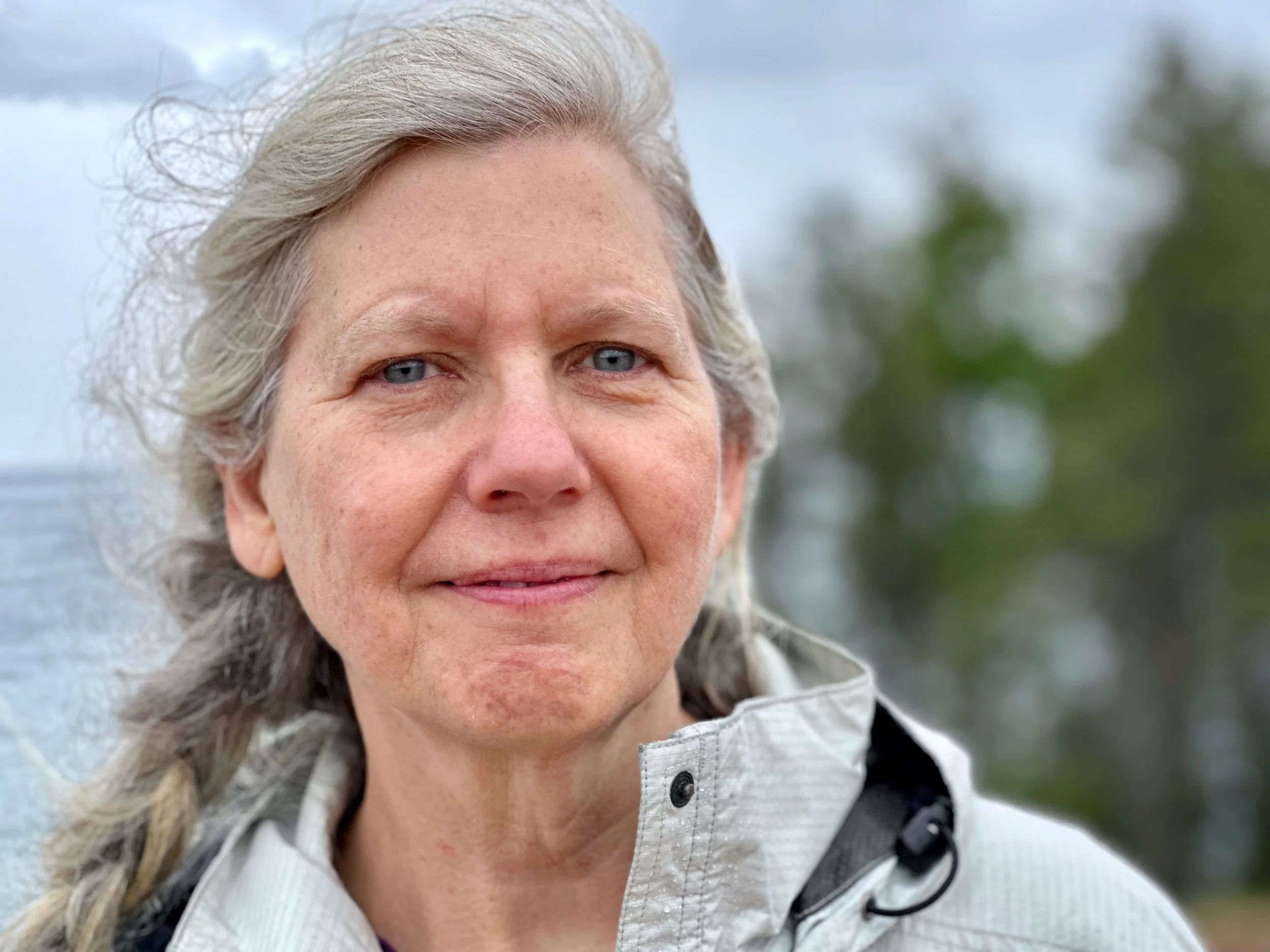
Mary Buchinger
________________________________________________________________________________________
The Shore Interview #59: Shannon K Winston
Questions by Ella Flores, Interview Editor
EF: I hope you’re having a good summer, Shannon, it’s been a pleasure to spend time with your work. I must admit, I wanted to interview you as soon as I first read your poem, “The End of Archives.” For its weighty title, I found it almost painfully brief. I loved how its opening address to the reader ends up implicating the reader as well in the loss the “I” is elegizing. Fittingly, it sent me through our own archives where I found your piece, “Mustard Seed,” in our Issue 12. Even with its stricter pantoum form, I saw a shared stake running across the two: how our sense of self gets entangled with art and, more specifically, with the page. “The End of Archives” ends in ruin, with the “I” picking up “a broken pencil // from under the rubble,” pointing to the difference between “brick and mortar” archives, (as opposed to digital or the theoretical “the archive”). Can you share what you feel you’ve gained from physical interactions with the written word and has that sparked different inspiration, connections, contrasts to you as a poet?
SKW: I find myself increasingly nostalgic for physical books and archives, which is what inspired my poem. Feeling books, smelling them and registering the weight of the pages—these are all integral parts of the reading process to me. I love seeing the stains, winkled pages and faint pencil margins in the books I read. For me, reading is such an imaginative process where meaning unfolds but I’m not talking only about the actual words or plot: I’m also talking about how those narratives unfold alongside the materiality of the book. I also find that I remember more about books if I have a physical copy in my hands. When reading on a screen or engaging with a digital archive, I find that my eyes glaze over a bit and I’m less likely to remember what I’ve read, or I remember it more generally and abstractly. I’m also more likely to scroll, get distracted by what I see online. Engaging with physical books seems vital to me, especially now, when I find it’s easy to forego quiet moments of reading and contemplation.
I’ll also add that during and after graduate school, I was lucky enough to spend a little time (just a few days) in both the Yale Beineke Library and the Princeton University Archives. I was fascinated by the physical process of entering an archive. After putting my stuff in a locker, I had to wash my hands, which I equated with a ritual of sorts. Then I started thinking about how many people (including the author, at times!) had touched that very same book! It’s kind of a surreal, magical thing when you think about it.
EF: I was thrilled to find links to recordings of you reading pieces on your website. To you, what’s the difference between a serviceable reading and a great reading? More than just avoiding “poet voice,” are readings for you more akin to musical artists “finding” the song when performing it live, or is it a separate thing entirely? Has a reading of your poem in front of an audience ever changed the way you understood that poem than on paper?
SKW: I’ve really come to appreciate reading my poems aloud as an act of communication and connection with my audience(s). I used to be quite shy about reading my poems because I was afraid that I’d stumble over a word, or the poem wouldn’t sound as strong as it did in my head. The minute I started feeling the cadence of the lines I was reading, I had a newfound appreciation for the musicality of a poem. And it’s always fascinating to see how the audience reacts in real time.
EF: With several poetry collections now under your belt, from Threads Give Way in 2010 to your recent The Worry Dolls in 2025, I’d like to open this question up to you as both a poet and educator with a comparative literature background: how might you approach teaching the poetry manuscript for poets at the arrangement stage? Are there any poetry books that immediately come to mind for different lessons? Has the structural language for a manuscript changed for you since your first book? On the literary landscape, have you observed the poetry manuscript going in directions you find productive, or are there directions you wish to see it evolve in?
SKW: Ordering a manuscript is hard. Each time I put a manuscript together, I struggle with the arrangement of the poems because I’m so close to them and it’s a ‘forest versus the trees’ problem. When I was putting together The Girl Who Talked to Paintings (2021), my MFA mentor, Matthew Olzmann, encouraged me to read Ordering the Storm: How to Put Together a Book of Poems, which was helpful because it encouraged me to ask some of the following questions about my manuscript: Is the story I want to tell linear or non-linear? What is the emotional note I want the manuscript to end on? I’d ask similar questions of anyone I was teaching. I also encourage them to think about the relationship between the opening and closing poems, and the relationship between a poem’s last line and the title of the poem that follows. It’s also important to think about a reader’s attention span: how can different poems, when put side by side, create interesting tensions and dynamics that a reader will want to explore further?
While I’m not sure I can speak to the literary landscape, I find that my own relationship to ordering a manuscript is changing. I used to think that a manuscript needed to have sections or, I should clarify, it was hard for me to imagine one of my own manuscripts without them. For both The Girl Who Talked to Paintings and The Worry Dolls, I also titled the sections to be explicit about the arc of the story I wanted to tell. I love Laura Kasischke’s The Infinitesimals because each section in that book has stellar titles (i.e. “At the End of the Text, a Small Bestial Form”) that guides the reader’s experience.
However, I recently assembled a manuscript—of which “The End of Archives” is the opening poem—where I have no sections at all. This is both new and exciting for me. I realized, however, in trying to add sections that they seemed somewhat artificial and imposed. My hope is that a more braided structure shows the many entangled themes of the collection. I’m currently rereading Rick Barot’s The Galleons and am really appreciating his collection that also doesn’t have sections.
So, if I had a wish for the literary landscape, it’s to embrace different ways of putting together a collection. My newest collection uses different forms (there are triolets, an abecedarian, a contrapuntal and several footnote poems) and it was fun to see how different forms speak to one another when placed side by side. I love playing with varied poetic forms and play, for me, is also crucial when arranging a manuscript.
EF: Are there any journals or magazines you're currently enjoying?
SKW: There are so many! Aside from The Shore, of course, I love The Adroit Journal, Rust & Moth, RHINO Poetry, West Branch, West Trestle Review, Beloit Poetry Journal, Radar Poetry, Pinch, Sixth Finch, Four Way Review, Public School Poetry and Thimble, just to name a few.
EF: Please speak to how two poems in this issue of The Shore (not including your own) are in conversation with each other.
SKW: I loved reading Julie Marie Wade’s “Grief as Troposphere” alongside Kristen Lee’s “Whaling” because of the way these two poems engage with the imagination. In Wade’s poem, the poem opens:
I imagine mountain-
climbers must feel this way
when they reach the rare-
fied air near the summit.
From the first line, Wade uses the word “imagine” to launch a contemplation of mountain climbing, which becomes an extended metaphor for grief. Particularly remarkable is how Wade’s speaker immerses herself in the world of the climbers to understand her own grief. The troposphere is the lowest layer of the earth atmosphere and Wade’s poem is likewise layered: there is the speaker and her imagination, the hikers and their trek, and the ways in which these two worlds converge to shed light on grief.
I found Lee’s “Whaling” poem equally compelling and layered in its immersion into the embodied perspective of a whale. While Wade uses the word “imagine” as a point of departure, Lee’s speaker immediately assumes the point of view of the whale. Much like Wade draws on details of the hiker’s trek, Lee puts herself in the position of the whale being hunted. Here are some of my favorite lines because they capture the up-close intimacy of the whale’s experience:
My candlewick spine
blackens, open skin
tarnishing like a child’s
wish.
What can others’ experiences tell us about ourselves and our surroundings? I feel as though this is ultimately a question both poems pose as they navigate, albeit in different ways, what it means to inhabit and survive in this world.
________________________________________________________________________________________
Shannon K Winston is the author of The Worry Dolls (Glass Lyre Press, 2025) and The Girl Who Talked to Paintings (Glass Lyre Press, 2021). Her individual poems have appeared in Cider Press Review, Radar Poetry, RHINO Poetry, SWWIM Every Day, West Trestle Review and elsewhere. Find her here: shannonkwinston.com.
________________________________________________________________________________________
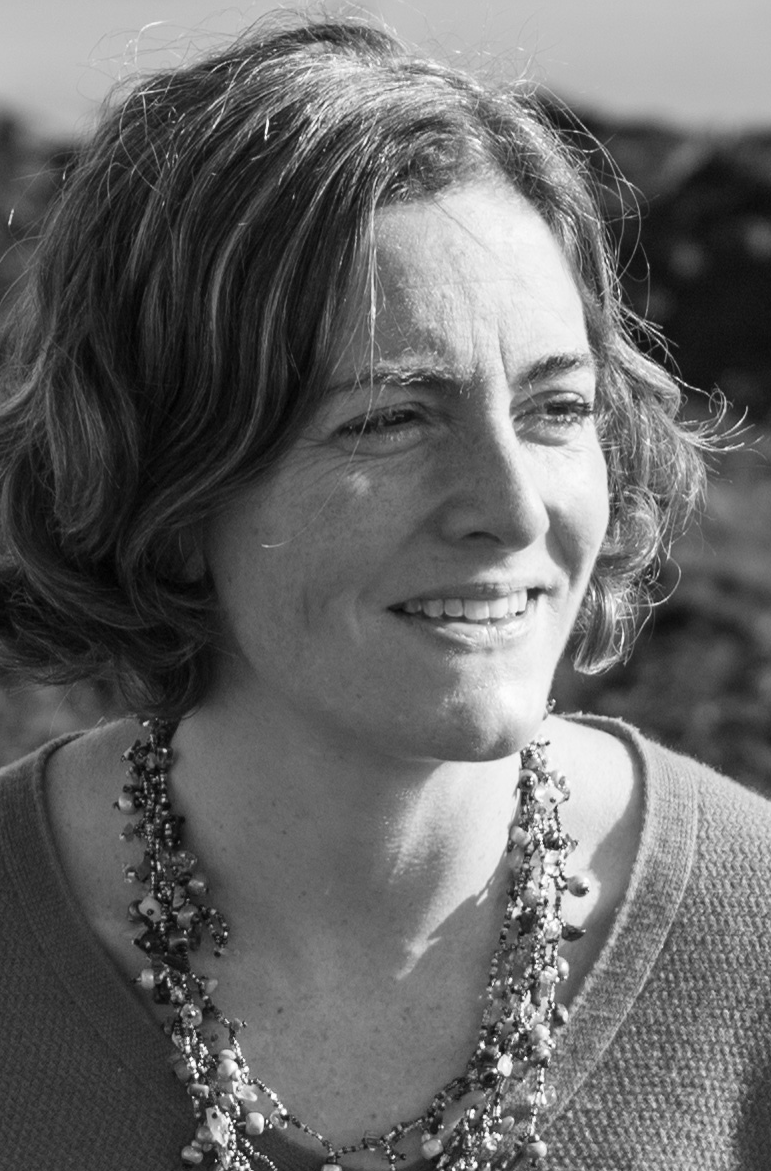
Shannon K Winston
________________________________________________________________________________________
The Shore Interview #60: Jingxuan William Zhuang
Questions by Ella Flores, Interview Editor
EF: Hi William, thank you for being up to do this interview! Your poem, “My Teacher Once Said To love” caught my attention for its many well-crafted aspects, but one that I wanted to focus on for this question is regarding its tempo. Every stanza contains at least one end-stopped line, almost every sentence interrupts itself with a comma break, the couplets are irregular in length and the entire poem is visually sandwiched by monostichs. All of this adds to a slowing effect, a recurring hesitance. How do you go about fine-tuning the tempo for a piece, in this poem or in other pieces? How do you tell if the tempo is working or not quite there yet? And are there specific effects you typically strive for?
JWZ: Thank you for sharing these thoughts! When I draft and edit a poem, I try to follow my intuition without verbally justifying each decision to myself, so it’s illuminating to know how you interpreted these moves.
I think what you called “a recurring hesitance” really captures how I approach syntax and line breaks. The phrase vocalizes a key element for my writing I didn’t know how to describe before. I have never been able to write in a fully direct tone, which I attribute to my avoidant personality.
It feels a lot more natural to burrow the speaker in sentences that pause, turn and interrupt themselves. The poetic form, with all of its elasticities, enables me to communicate in a style that would be really annoying in daily life.
In terms of tempo, when I have a draft, I read it out loud over and over. The line breaks usually correspond with my natural pauses, or when I see a chance to accentuate how a sentence can swerve around within the boundaries of grammar. An example of this would be “Resenting / the angle at which my elbow extends, / I walk the last mile home.” By reading aloud, I also locate the moments where something feels missing or extraneous. I feel out the lines’ ideal shape by pronouncing gibberish of various lengths and sounds. Once I find it, I try my best to fill it in with words.
EF: With a few journal publications now under your belt, can you tell me about your journey as a poet and how you got started sending your work out to magazines? Since getting your first poem published, how has that changed how you see the literary landscape when you see your work become a part of it?
JWZ: My attitude towards poetry changed a lot over the past two years or so. I’ve been writing poems casually since I was in high school and I got some poems published in campus magazines through my first two years at college, but I didn’t take the idea of being a writer seriously at all. I barely ever read poems. For whatever reason, I always thought I would grow out of writing and “mature” into “a normal person” who doesn’t write, I guess.
Two years ago, I took a workshop with the teacher who’s actually referenced in this poem. She was the first person who challenged me to push towards a certain direction instead of just giving one-off line edits. The rigor was new to me. I have since been hooked on the feeling of chasing specific effects with language, and I’m so grateful for the opportunities that have helped push me forward in this short time.
I started submitting work towards the end of last summer and seeing my work in a public context has definitely encouraged me to keep up my intensity towards the craft. At the same time, I feel very suspicious towards myself and the desire to be recognized. I don’t want my intention to be anything other than to make the piece that’s in front of me.
EF: Geography belies the entirety of “My Teacher Once Said To love” particularly in its seasonal position of cold January, the transit of the “I” through a city with seemingly public transportation and even the contrast of the winter with a cactus in a window. Being originally from Qingdao, China and now based in New York, how do you see geographical tension influencing or shaping your work? Perhaps adjacent to this question, how do you see having attended Tufts University in Boston informing your poetry now?
JWZ: I love the observation about the cactus, it’s so fun. That honestly was not done on purpose, but it’s always an honor to learn how people perceive my work and draw their own associations.
Growing up in China as a child, there was a strong emphasis on obedience. I was always afraid of making mistakes. Then, from when I was thirteen till graduating high school, I went to boarding school in the US. The environment was obviously very different and I wasn’t worried about the same things, but I still felt a lot of shame socially. I didn’t want to stand out, so I avoided expressing myself for the most part.
Arriving at Tufts was a revelation in that I was, all of a sudden, around kids who have felt similar frustrations. It was like delayed gratification, or this free-for-all of figuring yourself out. I ended up becoming reckless and self-indulgent, and spent a lot of time on what I would today call overcompensating.
But it’s not like the shame evaporated; it’s just more dormant. I now have two opposing forces that inform my personality, which I think shows in my writing. I want the speaker to be legible and striking, but also have a way out at all times. This poem, both in its images and statements, to me, gestures towards a feeling, but stops itself on a threshold.
EF: Are there any journals or magazines you're currently enjoying?
JWZ: For a while, I only read poetry from collections and anthologies. It made more sense to my brain to focus on one voice or theme over a sustained period of time. Then, when I moved to New York last fall, I worked at a physical therapy office as a receptionist. I found the work tedious, but I had a good amount of down time chopped up between tasks. My girlfriend had gifted me a New Yorker subscription and I spent a lot of my shifts reading random pieces from their archive. It was less conspicuous than reading a physical book on the clock.
When I got tired of the New Yorker, which was usually later in the afternoon, I would look up contributors to find their work elsewhere. It’s how I found The Shore. I also read stuff from places like the Washington Square Review, House House, the Margins, as well as lots of Poem-a-Days. If it were up to me, though, I would honestly still prefer books. (sorry!)
EF: Please speak to how two poems in this issue of The Shore (not including your own) are in conversation with each other.
JWZ: I love how “Dear Sounds” by Michelle Turner and “Distance, Closing Distance” by Samuel Dickerson, in their respective ways, associate the beloved with an atmosphere. “Dear Sounds” uses birds and music to give the emotions movement, while “Distance, Closing Distance” describes the lover with such attention that it makes the body a landscape.
It’s amazing how much sentiment can be imbued into images, turning them into agents of proclamation. It takes both abundance and restraint to do so. At the same time, it makes me think about how difficult it can be to address someone you love. I feel lucky poetry can help with this task.
________________________________________________________________________________________
Jingxuan William Zhuang is a writer from Qingdao, China. He has been in New York for a few months.
________________________________________________________________________________________
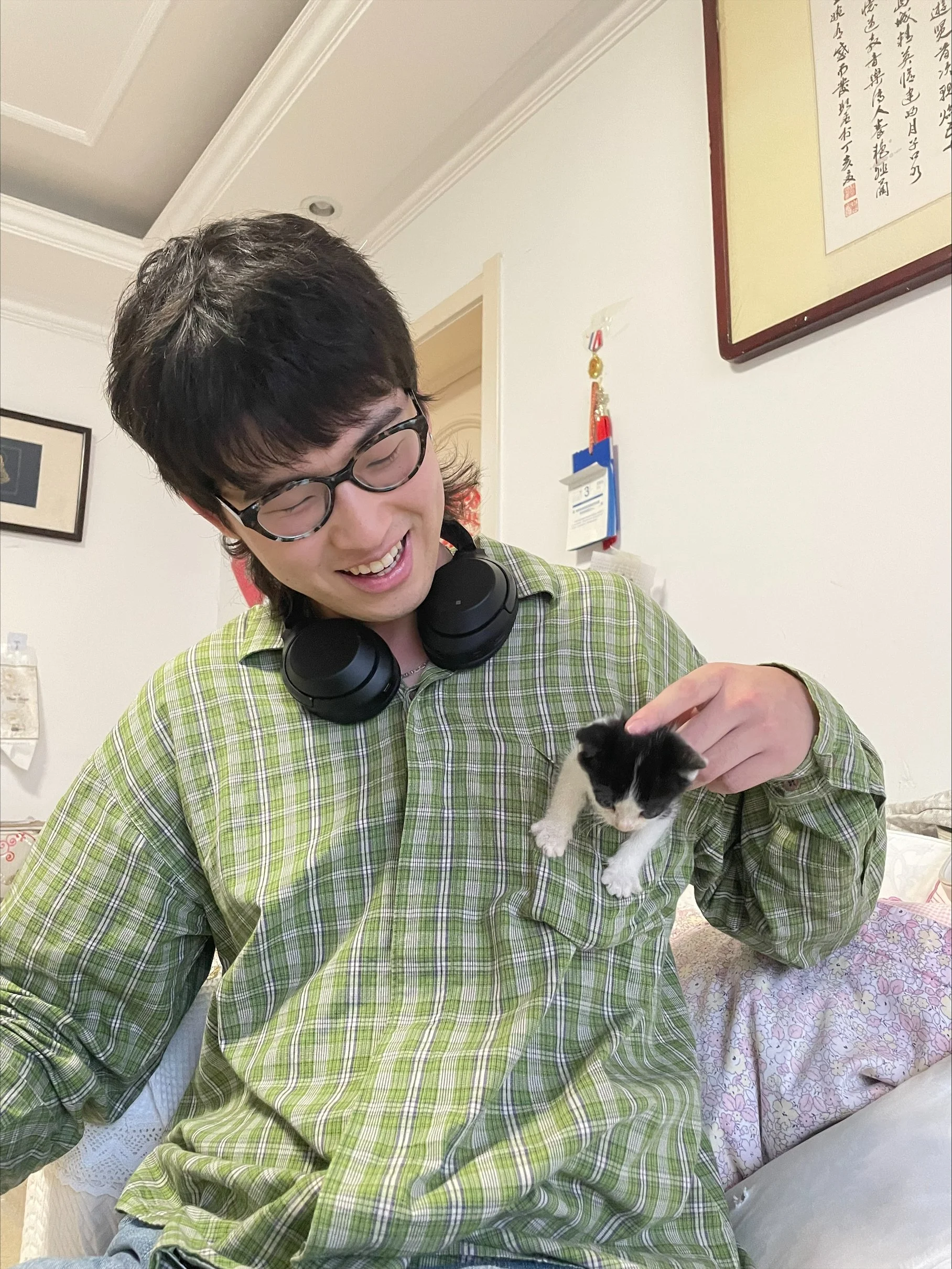
Jingxuan William Zhuang