Issue 14 Full Text
________________________________________________________________________________________
Flourish Joshua
mannequin
you are all that mercy has forgotten.
you shift the curfew, bless the wounds—
they still wouldn't dance into light.
your gods have given up on you.
there is nothing awake
in your house. you, a torturous bone,
songless name. how do you dance
with a broken feet?
your legs wobble when they try to run
the miracle race. there,
grace is pulling you out of itself
the way your father jerks off his concubines.
how do you bless the wounds
with a cursed mouth?
your mouth
a calligraphy of impossibles, limbs
the shape of a demon's yawn.
you give yourself to the mirror, it sings
you into a shadow. tell me
you are not the cough of a graceless thing,
I will show you
how counterfeit a prophet you are.
your knee a poisoned arrow,
all it does is prey before a trap.
In the near,
a wolf feeds on your joy for dinner.
your scar backsliding to its wound,
your shadow begging to know no light.
you plant your name, water it with faith.
you read Matthew 11:28 into a river,
& get yourself drowned.
________________________________________________________________________________________
Flourish Joshua
Akeldama
for Deborah Yakubu, beaten & burned to death for blasphemy
Perhaps grace is a tangible thing
only to the one who watches another bleed.
—Pamilerin Jacob
1.
Again, a hashtag trades a name
for justice, but they will not buy
what the hashtags have to sell.
2.
O, graceless country, confide in me—
how did you end up
with mouthfuls of Jericho?
With eyes the assignment of blades?
3.
In my country, they are sending a woman
on a journey of no return,
for wearing a tongue too sacred to translate.
They are pressing her
into the palm of the earth
as offering to their god.
4.
A man says sodom is best
a name for places like this
with wildfire as eyes, & we hear God
say, that is too holy a name.
5.
In the near, they are fighting for their god,
& knitting cruel things
to its name: say, impotence, imbecility, folly, …
6.
Perhaps fate is the substance
of things unhoped for, the evidence
of things we [all] see.
7.
Here, they will fasten a grenade
to your tongue if your voice manages
to slip off your mouth.
8.
Everything is fashioned
to reserve you a seat
at the mouth of a wound.
9.
Preacherman, how dare you say
grace will abound? We run
to God for grace—grace, too,
is on the queue for grace.
10.
They will blow our minds
if we say our minds.
________________________________________________________________________________________
Flourish Joshua is a Nigerian poet, a member of the Frontiers Collective.
________________________________________________________________________________________
Aron Wander
Often, we forget
that love, too, can end beautifully,
like a last baby tooth or sunset, the sky
framed against buildings struck scarlet and blue
and made suddenly fuller. I suppose you could say the same
about anything, that it could end like evening,
with dignity, the way revolutionaries stood before the guillotine.
The quiet grace of the sky as it becomes something older.
It is not much help to say that all things go suddenly or softly,
bathroom lights or crumbling plateaus, but they do.
The tide comes one way or another and we walk,
full-breasted, bent, bowing.
________________________________________________________________________________________
Aron Wander is a Cambridge-based writer, organizer, and rabbi-in-training. His work has been published in Thimble Literary Magazine, The Curator and elsewhere. He likes mysticism, sci-fi, and scavenging for used books.
________________________________________________________________________________________
James Kelly Quigley
Rain
I’ll stop writing about the rain when it stops raining.
If silence comes for the birdseed in your hand, don’t breathe.
You’ll know whether its wings are hope or grief.
Speedwalking alone in the rain with purple dumbbells
she knows the past is irretrievable. The future is out there
but unreachable, like seeing the ocean on TV
and gliding your fingers over the buzzy, magnetized glass.
Where the cuffs dug in, he rubs his wrists
with that particular American exuberance
we have for mimicking the movies. When Scorsese shot Taxi Driver
he had no money for lights, so his DP told him
“Wait until it gets dark and the city will light itself.”
When I die, bury me in neon. Tell everyone
I went straight to hell and miss them terribly.
Plant a tree in the park for me—
whichever kind Taylor prefers. Give my books to the library.
Enjoy the silence. Talk to the rain with your hands.
________________________________________________________________________________________
James Kelly Quigley
Rain (Redux)
as the rain rains
it makes the park wormy
and full of rain
in whose auspicious
company I am
ancient and indisputable
eating candy cigarettes
in a kiddie pool
cuz it’s a good time
on the cheap
I am buzzy
almost waltzing
but mostly tumbling
into somebody’s
aunt’s arms’
warm sausage
her maternity gown a new
better kind of drapery
the rain woven
with smoke at the patrol’s
cracked-open window seems
to be orchestrating everything
even the intrusion of tarot
into polite chat
about the new James Bond
city of black bread
and daisy chains
I can only get so philosophical
it’s more enjoyable to be
dumbfounded by
human people
all over the place
buying things and
saying things of no consequence to
draw out their goodbyes
oh good old-fashioned rain
a dancer
trying to mimic
a cave-in
________________________________________________________________________________________
James Kelly Quigley is the winner of the Phyllis Smart-Young Prize in Poetry. He is also a Pushcart Prize and two-time Best New Poets nominee. His manuscript Aloneness was a finalist for the 2022 Brittingham and Felix Pollak Prizes in Poetry. Recent work has been published or is forthcoming in The Los Angeles Review, New York Quarterly, Denver Quarterly, Narrative, SLICE, The American Journal of Poetry and other places. He received both a BA and an MFA from New York University, where he taught undergraduate creative writing and was an editor of Washington Square Review. James was born and raised in New York. He works as a freelance writer in Brooklyn.
________________________________________________________________________________________
KJ Li
Light, as I Have Perceived It
In the deepest mouth of the ocean, the world’s unbearable
weight grows so deep, its dark so large, it would destroy
any human gesture. Our fiercest instruments
offer only foreign fragments that I above interpret:
creatures who move through the constant crush
of what sustains them, wearing hideous teeth
to crush my teeth, pulsing hearts to fit inside
my heart. In the world above water, a heron shatters
the sun’s long glimmering gullet and emerges vicious
& victorious—in its fist, a gleaming fish slapping
itself uselessly against shallow sky in protest
or entreaty. Or, from another view: a scrap of light
trying to return to source. Deep below, creatures
who pass lifetimes without knowing light save
what they themselves can summon: skin-light
to lure more beautiful beasts, which my human eyes
make into an offering; wound-light which poses a question
to which they and I do not answer. The home
light makes of any body that is opened enough
to receive it is the closest I can come
to beauty. Wielding the instruments against
myself, I found the best way to vanish is not
through the obstruction of light, but by dissolving
into it. The question: how & why to live a life
without learning & relearning more brilliant
means of leaving. In another life perhaps I, alongside
the beasts below, would sacrifice illumination for a fragment
of a world unpricked by our knowing. From light,
to return to this: a black so hungry & complete
no living eye can perceive where animal ends
& becomes the dark.
________________________________________________________________________________________
KJ Li
Catalog of Unearned Gratitudes
—After heidi andrea restrepo rhodes
On the back page news: profiles of chicken-catchers who, owing
to their labor, developed incurable swelling in their knuckles
that I might fill my mouth with cheap meat, a father trembles
to lift his child’s spoon to fill their mouth
not until years later will the child learn
to call this weakness
that I might flit from shade to shade, feet shielded
from sharp sun & stone, invisible waste fills the bloodlines
of every fellow animal, children’s feet salt and harden in the unrelenting
air—their names added to the catalog of things I will never know
I didn’t know until years after leaving that when a girl became
pregnant at my school she was asked to leave
to another place, that the rest of us might learn
undisturbed by life itself—
in our teachers’ eyes, our ignorance a coin
as precious as any violence
knowledge itself can never
rupture paradise, only exact its price
every day my catalog only grows: the language for every harm born
& borne that I might sit here, head bent against the sun,
& write these words, splendid & not, alike
each stroke weighted by uncounted
lives spent bearing against the dark, yet in
my unearned hands, lighter even
than a child’s spoon
________________________________________________________________________________________
KJ Li
Aubade at the End of the World
It seems foolish to say so now: I did not imagine ruin
could be so shining. In my mother’s hometown, white
ash melts against cracked tongues, generations
of voices folded into every speck. Here, on this distant
earth, the horizon gutted by a shade of flame
that scours the sky of any lesser light. Bright
as any paradise. When we cast our last misshapen
prayers against the mirrored dark, we did not
yet recognize worship as a slower means
of burning. In sufficient light,
even the gods can become
any common animal. How many lifetimes
we have forfeit trying to undo
this transformation: making
and remaking what burns us, plotting
ways to get to heaven when we die
and no sooner. When the last child comes
upon this earth, may they come empty
of such hunger. Everything we built is brilliant
to no end. We were not made
to think of ourselves as splendid.
When the gods burned among us, animals
touching animals, we could not understand this
as other than tragedy. To exist, to be witness here
amongst so much vanishing, must be a sin
or a miracle. Or every miracle
is also sin. Against what, the shining gods
won’t say.
________________________________________________________________________________________
KJ Li is an LGBT+ Chinese-American raised in central Texas. She currently lives in Washington, D.C., where she takes long walks and misses the family cat. Her work has appeared or is forthcoming in The Shade Journal, Overheard Lit, Chestnut Review and others—more can be found at https://kjli.carrd.co/.
________________________________________________________________________________________
Meghan Sterling
Sea That Has Become Known
You think you’ve seen it, the shape of moon
in the surface of your bed, the movement
of your own body in water when all is lost
to buoyancy, when everything else has been
drowned in remembering. What was it really.
Pines like the brushes you used to comb
your toy ponies. Stone and bark collections
staining the white wooden sill. A baby that cries
in the night with a voice like the underside
of an oyster shell—sharp flakes like skin and its
metallic rainbow. All you know is yourself in
different forms—puddles full of palm fronds, rivers
stumbling over boulders, oceans that separated
you from your body—how in dreams it all bends
to the moon you once saw in the palm of hands
full of pond water. How the hands were yours.
________________________________________________________________________________________
Meghan Sterling’s work has been nominated for 4 Pushcart Prizes in 2021 and has been published or is forthcoming in The Los Angeles Review, Rhino Poetry, Colorado Review, Poetry South, Birdcoat Quarterly and many others. She is Associate Poetry Editor of The Maine Review. Her first full length collection These Few Seeds (Terrapin Books) came out in 2021 and was an Honorable Mention for the 2022 Eric Hoffer Grand Prize in Poetry. Her chapbook, Self Portrait with Ghosts of the Diaspora (Harbor Editions), will be out in 2023. Her second full length collection, View from a Borrowed Field, won the Paul Nemser Poetry Prize (Lily Poetry Review) and will be out in 2023. Read her work at meghansterling.com.
________________________________________________________________________________________
Alyx Chandler
Tight Grip (or Trichotillomania)
Routes stick to my tire
like wet carcasses pulled
over a bridge, my breath
reduced to a vehicle I can’t
control, mechanical parts
possessing my whole. I go
ghost, hands twitching at
the wheel, gripping for roots.
Compulsions leak down linage
till they’re part of my engine, the oil
in every mile and no matter how
I change, my body won’t stop
storying—won’t stop trying,
driving toward the edge of an
impulse. That mountain dark as
urge: a break with no brakes.
I crash at beauty’s impasse,
everything in me bursting
till I’m forced to stop, hands
thrown from the rearview mirror
in the shudder-puncture of a nail
as it rips my wheel from the road,
my scream high-pitched as the yip
of rubber. I’m torn from my trance,
bare with relief. Stranded with a tire
in my hands, tired blown-out mirage
of myself. I let go. I leave my eyelids
alone. I wait here to be towed.
________________________________________________________________________________________
Alyx Chandler
Curses
I try to be brave
in my body
but who can with
family like humidity
everyone sweating
out their egos
the neighbors commenting
on each other’s figure, oh
how much they love
a barbecue of compliments
served up a little burnt
all of us made fake-sweet
in coated meat
dad says pick everyone
some tomatoes out back
throw in a few big ones
show them what a good
year it’s been
I don’t I grab
the skimpy limp-thin
ones contorted fists
weather-beaten bodies
pile them up in my t-shirt
this cloth bucket
I hold out
and underneath I let
my own belly hang holy
I hand them curses
little witch fingers
curled hot peppers, c’mere
________________________________________________________________________________________
Alyx Chandler
Never Went to Space Camp
Instead I strap myself snug and barred
into the Moon Shot simulator’s arms,
get slung open-mouthed above Rocket City.
Only takes 2.5 seconds, quick as judgement
to see the backroads ballet: a turtle creep
of Toyotas, old airfields, short-leaf pines
hug-haunting a highway. My home
a little speck I can’t make out but try.
Height is hypnotic in a town that hunts it—
wide open for the taking. When I sing,
I’m serenading against the silence
of a broken sound system all the way
to the devil’s billboard on I-65. He’s lovable,
bright red, long-tailed with a scythe and a sign:
Go to Church or the Devil Will Get You.
After a storm strikes him down, my brother
gets me the t-shirt and I wear it every night
on high alert for cloven hooves. Never a sound,
just the turtle my dad rescues from the road,
brings back shy but alive, poking its head out
for a home. County Line Road bloats with recent
suburbia then slips back into what I know: a place
where you roll your windows down and laugh
up at the heavens because Eggbeater Jesus
is too expensive to be saved but First Baptist
is doing it anyways. Cosmic Christ shining
from liftoff to landing. What do I really know
anymore about my home state when every day
I get further from it, closer to a bird’s eye view.
Only that all roads lead me back South, feral in it
and nostalgic without it, where my whole world
is still in my mom’s bulky nylon purse, snuck into
a movie at the planetarium with enough handfuls
of Dollar Store candy to get me straight to the moon.
________________________________________________________________________________________
Alyx Chandler (she/her) is a writer from the South who received her MFA in poetry at the University of Montana, where she taught composition and poetry. She is a publicist for Poetry Northwest, a reader for Electric Literature and former poetry editor for CutBank. Her poetry can be found or is forthcoming in Cordella Magazine, Greensboro Review, SWWIM, Anatolios Magazine, Sweet Tree Review and elsewhere. Learn more at alyxchandler.com.
________________________________________________________________________________________
Derek N Otsuji
Hunting for Octopus at Night
We wade into the black bay
under a whisper of moon, curtain of ink
drawn back by the gas lantern’s
hissing flame to reveal, in clearness,
the seafloor, where we scan,
spears in hand, for red plumes
of the blooming octopus
walking shallow sands.
In the lamp’s circle
we huddle close. We’re amateurs,
following our guide
whose agreed
to show us his backyard waters.
Wavelets lap at our bare legs.
We talk to fill the silence,
giggling at each squish
beneath our feet.
Out of the black
a needle fish launches, flies
over J’s shoulder,
narrowly missing his head.
A twisting silver torpedo
plunges back
into dark.
We’re electrified
but quickly cautioned by a tale
of a fisherman’s boy
impaled in the heart
by just such a fish’s needling beak.
J spears a goat fish,
then a mullet. Our bucket
won’t return empty
at least.
But no octopus—
shy recluse
wreathed about with arms
like water weeds, grasping after food and fact,
a mind moving with serpentine
stealth, intelligence in its element
where we find our wits
outmatched, led on this chase
through the watery wild, not knowing where
or to what possible end.
________________________________________________________________________________________
Derek N Otsuji lives and writes on the southern shore of Oahu, between the Ko'olau Mountains and Kewalo Harbor. He is the author of The Kitchen of Small Hours (SIU Press, 2021). Recent work has appeared in 32 Poems, Beloit Poetry Journal, Bennington Review, The Southern Review and The Threepenny Review. New poems are forthcoming in Crazyhorse and Cincinnati Review.
________________________________________________________________________________________
Robert Fanning
ísrák // glacial striae
Earthscrawl. Rockpaper. Hurtsong. This holy ravishment. This network
of astonishing wounds. The language of damage. On land, on the body.
What we made with what breaks us. This abrasion of hours, the weight
of memory. The glare of rough praise. All art is living evidence of what
we moved against. Of what moves us. Of how we dragged a world in us
over rock, back to the sea. In these lines, on this body. Go on—read
the ways of my going. This scratched sediment on a page. All that’s left
is ghostpoem. A valley I carved out. How I slowly left all that held me.
________________________________________________________________________________________
Robert Fanning (he/him/his) is the author of four full-length collections, Severance, Our Sudden Museum, American Prophet and The Seed Thieves, as well as two chapbooks, Sheet Music and Old Bright Wheel. His poems have been published by Poetry, Ploughshares, Shenandoah, Gulf Coast, Waxwing, THRUSH and many other journals. A Professor of English/Creative Writing at Central Michigan University, he is the Founder/Director of PEN/INSULA, an online resource for Michigan poets, and the Founder/Facilitator of the Wellspring Literary Series, where he lives in Mt. Pleasant, MI.
________________________________________________________________________________________
Siobhan Jean-Charles
Fingers without Hands
“Iodine night sky, straight to veins through eyes.”
–J Robbins
Before we split, I did not know,
like a pair of Eves molded from the same lump
of imago. If your right hand offends you, cut it out. But it wasn’t
my hand, it was my fingers sliding, cupping, stroking, as if I could coax
a moan from your lips. Your body stopped
responding to mine long ago. You hardened and every soft curve became alabaster. Your gaze
was unblinking, fastened to the ceiling, legs spread like you were stargazing
on a cloudy night. Once you started playing dead
on the mattress I stopped
playing dumb. I didn’t want
unenthusiastic consent. We were not making love. My mouth
on yours was rubbing two sticks, grinding for a spark that will not.
We were dry halves of worn wood, whittling one
another down to frayed splinters. Do I tell
my friends how you laid my rabbit across your thighs? She was
belly up, eyes wide. You touched
her as if you were slipping a child’s sweater over their head
gently, as if you worried about shattering something. Do I
tell my family the first time I felt afraid of you was at the boardwalk?
I gazed up at the night sky, as if the dark would swallow
me. The darkness would not be a rescue, but a terror. The sinew
has been severed, and I have cut off
my circulation from you. Is this the price?
________________________________________________________________________________________
Siobhan Jean-Charles
Dysania
I want to give you a Haitian goodbye. The initial farewell
at dusk while we talk at the table until the ice is beaded dew
on glass. Stand on the threshold for two hours,
one hand on the doorknob. On the steps until
the porch light thrusts our shadows to the car
to sit in the driveway, windows down, key in
the ignition and a miasma of wasted gas. I lie
to my parents and everyone knows where I am.
The tickle of mosquitos, the blood that pounds
in my shuffling
feet is my inheritance–the mannerisms of unspoken
pleas, the denial I don’t want to leave.
________________________________________________________________________________________
Siobhan Jean-Charles is an English major at Salisbury University. She is a reader for the University's literary magazine, Scarab, and a writing consultant for the writing center. She enjoys writing poetry that explores nature, power dynamics and internalized oppression.
________________________________________________________________________________________
Ariel Machell
How to tend to
the forestry of your cat’s face,
the long grasses reaching—
Don’t pluck as children do
in mounds on dew-heaped hills.
Caress as though a harp.
Glide as the wingtips
of a pelican cresting a wave.
Though if you must pluck, do so
as delicate as the first time
you lifted your father’s guitar
and gave a childish strum.
You might remember
you heard music.
There was none.
You must give up
your dreams of straight lines.
Nothing can move that way,
and memory only
in circles.
Remember now
to slide the dust
off the strings.
Listen to that purr.
You have learned so much
about kindness.
How it wants to be given
like a seed to a stream.
It might grow
or it might sink,
but isn’t it soft
leaving the hands?
Isn’t it soft.
________________________________________________________________________________________
Ariel Machell is a poet from California. She received her MFA from the University of Oregon in 2021. She is an Associate Poetry Editor for Northwest Review. Her work has been published in The Pinch, SWWIM Every Day, Up the Staircase Quarterly and elsewhere. Her poem, “Devotion,” was recently nominated for Best New Poets 2022.
________________________________________________________________________________________
V Batyko
For You, Without Me
Through the mirror, I watch you
speak to a friend. Pretend
I’m not paying attention. Your hair
which I cut and shaped last week
is growing, falling back
into its natural tendencies.
You struggle to find
the perfect word, blinking lots
like a horse batting off flies. I know
the word you want to say, but choose
not to tell, knowing
the dent my voice would make.
You pour another pot of tea.
There’s not much time
until it’s fully steeped, until you fill
my cup, catch me—You stop, turn
to watch a hummingbird sip
at the feeder, beak long as hair.
She will never know you: you
who concocts her nectar, who
watches her swill it up daily,
who calls her greedy tenderly.
You want to snap a picture of her,
but as soon as you take out your phone
she flies away.
________________________________________________________________________________________
V. Batyko is a poet from Los Angeles, California. They hold an MFA in poetry from the University of Washington. They are the recipient of the Joan Grayston Poetry Prize from the University of Washington and the Beau J Boudreaux Poetry Award from the University of Southern California. Their work has recently been published in Ninth Letter and The Journal, and they were a finalist for Columbia Journal's 2019 Winter Contest.
________________________________________________________________________________________
Marcy Rae Henry
Prozac Makes Its Debut
On Sunday we agree it will be 1987 all day
even when we change the subject. A key
to a door that once opened to a garden.
The longing to pull the fire alarm. Driving home
a terrible parable. The record player moves
in a circle not a line. Lines on our faces
are mistakes. Classical continuity when a jump
cut would do. Bands are like racehorses. Some
like big fat houses. It is not recall. Not regret.
It is small zesty shavings. Dancing on toes
when the soles will do. When holding hands
meant something. Beautiful and insubstantial
as a crowning merengue. Everything behind us
is in front of us. Putting puzzles together
has always been popular.
Never has there been a decade
more like sunrise. We were all unknown.
Heart on the radio. We practiced drums
to acid rain. Built Thursday as if failing a test.
All day we believe aliens might save us.
We wait for 87 to kick in, for something
to restore our interest in daily living.
________________________________________________________________________________________
Marcy Rae Henry es una Latina de Los Borderlands y parte de la comunidad LGBTQ. She studied stuff in Spain, India, Burma and Nepal, hitchhiked around France, Spain and Portugal and motorbiked through the Middle East. Her writing has received a Chicago Community Arts Assistance Grant, an Illinois Arts Council Fellowship, a Pushcart Prize nomination and first prize in Ember Chasm’s 2021 Novel Excerpt Contest. Her writing and visual art appear in The Columbia Review, carte blanche, Epiphany, The Southern Review, Cauldron Anthology and The Brooklyn Review, among others. DoubleCross Press will publish her chapbook, We Are Primary Colors, this year.
________________________________________________________________________________________
Hannah Riffell
Caravan
On a blue-marbled water, bristling
with a caravan of toothpick ships, I
am a hand, plumbing the shallows
for a fossil, any substance long-accustomed
to being. I pretend I am the open hand,
and that the great ships disappeared
on the night when all the thickets shifted
and the songs we sang in the dark
became sounds that still hound our children.
I imagine more than I know, and know
more than I forget, and forget more
than I can replace with things imagined.
See, the horse is bridled with barbed wire,
the shore tattered with gulls. I am
a child playing with shadows, the mother
mourning on the cliffs, the father weeping
by the kettle, the dog sniffling
at the open door, the sister running,
running. Dawn breaks. I am suspended
above the stone-cold sea, afraid
that whatever I happen to unhand
will drown. Once there was a name
for every shadow on the water,
every dark shape in the sky but I
have lost the rarest ones, even those
that once belonged to me.
________________________________________________________________________________________
A graduate of Calvin University, Hannah Riffell is a writer from Grand Rapids, MI. Her work is featured in PANK Magazine, Heavy Feather Review, Blue Marble Review, Dialogue and The National Writers Series Journal.
________________________________________________________________________________________
Anne Taylor
What Will You Do with Yours?
Will you sing it into a cedarwood coffin
filled with petals, or peg it to a washing line,
willing a rough breeze to snatch it
carry it
into someone else’s garden.
You could tug it down and press it stiff,
steaming out its creases, telling it all the time
not now, not him, not me, not again.
Or will you melt it like chocolate in a small pan
until it bubbles soft sticky, almost palatable.
The done thing is to frame it of course,
stand it neatly at your bedside.
Or you could bottle it as vinegar,
which some say doesn’t have a shelf life.
Or smash it hard, time and time again,
like a ball against the sea wall,
squeeze it like an egg in your fist,
testing its strength, and your own.
Put it down like heavy shopping that has
bitten into the lines of your tender fingers.
Tell me.
________________________________________________________________________________________
Anne Taylor is a poet and teacher based in Cornwall and London, UK. She is seeking ways to grow old with grace and elegance with the help of her three wise children and a pesky dog. Her work has been published in Uneasy Heads, on PoetryandCovid.com and is soon to appear in Cornish Modern Anthologies published by Broken Sleep books. She won second prize in the international Cornwall Contemporary Poetry competition 2018.
________________________________________________________________________________________
Lily Beaumont
Wile E. Coyote Brandishing a Gun
Because you’d watched your fur become
redundant
and your claws fracture
into opposable joints, you untamed
yourself
on whips
of desolate fence, on poisons planted hopefully
as roses, and found
a weapon starved spare as your
paw prints.
________________________________________________________________________________________
Lily Beaumont
Thinking about Reactivating My match.com Account while Folding Laundry
Each winter, my legs tangle
in the wash—in spider-bodied knots
of black tights. They cross without
demureness, wad like tissues
I’ve been cleaned out of, but where
the geometric mess of me persists.
Why don’t you wear blue or green
or burgundy, my mom wants to know.
My ready answer: black’s easier
to keep looking fresh (there
are so many ways to bleed
into your stockings). The truth:
it goes with everything, the way
I never seem to manage, myself.
________________________________________________________________________________________
Lily Beaumont’s poetry has appeared or is forthcoming in publications including Prolit, Star 82 Review, Crow & Cross Keys and Phantom Kangaroo. She has an MA in English from Brandeis University and currently lives in Central Texas, where she works as a curriculum/study guide developer and editor.
________________________________________________________________________________________
Jennifer Martelli
Clothes Pins
They were wooden, toothed, and they pinched
with a coiled hinge. I kept the ones that fell
from my mother’s mouth or dropped from the sack
on the green pole cemented into the kidney-shaped
patio. The flowers my mother planted all along
the far end in the small garden thought too hard,
too deep, too long. This made their heads big,
heavy. They swung on their thin green necks,
weighed themselves down with the heat.
Everything in that backyard absorbed the sun:
the rectangle of jonquils, tiger lilies, asters,
cosmos, the clothes, the cotton rope to hold
the laundry. I would put a clothes pin on each finger
to give myself claws, and sometimes, I made them
my puppets: live things with jaws, trying to eat each other.
________________________________________________________________________________________
Jennifer Martelli (she, her, hers) is the author of The Queen of Queens (Bordighera Press) and My Tarantella (Bordighera Press), awarded an Honorable Mention from the Italian-American Studies Association, selected as a 2019 “Must Read” by the Massachusetts Center for the Book, and named as a finalist for the Housatonic Book Award. She is also the author of the chapbooks In the Year of Ferraro from Nixes Mate Press and After Bird, winner of the Grey Book Press open reading, 2016. Her work has appeared in The Academy of American Poets Poem-a-Day, Poetry, The Tahoma Literary Review, The Sycamore Review, Cream City Review, Verse Daily, Iron Horse Review (winner of the Photo Finish contest) and elsewhere. Jennifer Martelli has twice received grants from the Massachusetts Cultural Council for her poetry. She is co-poetry editor for Mom Egg Review.
________________________________________________________________________________________
Lisa Trudeau
Dreaming the Dead Yellow Dog
today or yesterday or another year like this
I configure drifts nickel skies
late-ice swamp tree to tree
I slip past pots of methane belch
radiating lines of seep to shore where
something stares snout white with age
no collar not loved not lost
dead just the same stopped
and eaten through its middle clean
frozen quick pimento red
the rest untouched yellow fur
one black eye open unseeing sleep
hours pass or weeks
he will not leave me that dead yellow dog
crisping leaves as I walk home
head beneath my hand as I wake from
dreams of spring-slick trails
claws pinching mud a slog
through thawing woods to find him
snout now ringed in green
body mostly bone and pelt
maggots curl through what is left
movement everywhere wood swamp sky
peepers louder than blood cork my ears
how warm the shallows the dark wet earth
minutes or ages again rain will rise
drown him beneath lotus buds
nodding heavy heads at me alone
awake in whatever now
________________________________________________________________________________________
Lisa Trudeau is a former publishing professional and independent bookseller. She lives in Massachusetts. Recent work has been published by Levee Magazine, Cypress Press, Constellations, Eastern Iowa Review and Connecticut River Review, among others.
________________________________________________________________________________________
Kimberly Kralowec
You’d Think It’s Fever but the Scale Is Wrong
—a personal kind of climate change, causing the globe
to warm. The moon grows redder and farther
away, chipped off perhaps by asteroid or shifting
plate over plate: the earth’s last meal. I no longer
trust the outside air. Something erupts from a core
I didn’t know I had—soon I’ll sign my name with heat
instead of warmly. Could I harness it, turn it off
and on? My paper darkens as I write—melding the
far with what’s near. The ground shakes as if all
the world’s poets were knowing at once: Elegance
means the shape of the dried rose—a finch died because
we put food out for it. I hear nothing but snowmelt
trying to flow. What a place this is. How long
can we think of ourselves as young?
________________________________________________________________________________________
Kimberly Kralowec is the author of a chapbook, We retreat into the stillness of our own bones (Tolsun Books 2022). Her poetry appears in journals such as wildness, Twyckenham Notes, Nixes Mate Review and The Inflectionist Review and she was recently named a finalist in the River Styx International Poetry Contest and a semi-finalist for the Jane Underwood Poetry Prize. A lawyer by profession, she holds an English degree from Pomona College and lives in San Francisco. Her poetry blog is anapoetics.com.
________________________________________________________________________________________
Laura Vitcova
Shema
Shema yisrael, adonai eloheinu, adonai echad
On the edge of your bed bones exquisite ready resting
your arms on the arms of a hospice nurse your nails
still painted hair a shade of red your essence
hangs deflated on to the scent of earth
a stethoscope on top of your vanity cancer dreams dusty long
eyeshadows lipsticks olive skin leather pumps polyester
perfume blouses stained tracing the sun the moon
your silvery eyes blue the color of a newborn's
a fistful of lemons the scent of citrus your lungs disintegrating
the scent of citrus the sun disintegrating
your tongue disintegrating
inside being eaten
sun falls pink on the fuzzy you sleep in resting
my head on your chest afraid to crush you
ancestors come cut breath flutters
yiddish landing in pieces
I thank your feet your wilted
womb singing
the shema
________________________________________________________________________________________
Laura Vitcova was born in Northern California and writes from home in the San Francisco Bay Area. She is a multidisciplinary artist with a passion for language. In her spare time, she is hiking with her dog, attending workshops or looking through the lens of a camera. Twitter: @lauravitcova
________________________________________________________________________________________
John MacNeill Miller
A Technique for Recording
They gather the birds with gloved hands.
A snap of latex and the brittle tibias
pinch in their pudgy fingers,
the world’s thinnest cigarettes.
Doors swing open. Subjects
escape to the isolation
of individual housing and land
on darkness, sponges
bog-soft with ink.
There is no music. Nothing sings
as the technician looks up beaming
a star-studded replica of the heavens
overhead, late summer pasted to a dome.
(The sky they saw was fake.
But what is mind if not the bent
to be moved by another’s deceit,
to see in manmade pinpricks
something celestial, an imitation
that might orient us?)
Pulse and wings flutter.
The animals scramble
homeward all evening.
Each abortive leap
leaves black scratches
across paper that holds them
hostage, lines meant to outlive
these hard-beating hearts.
(The birds alone were real.
They are dead now, every one
irrecoverable as the sights
our eyes follow at night,
the desires spoken only
in the mascara hieroglyphics
you scribble into the pillowcase.)
________________________________________________________________________________________
John MacNeill Miller
Taxis and Instinct
The greylag goose sticks her neck out
for her own. Not an egg rolls off but
she pockets it: the bill
slapped down, the gambler
gathering back deficits.
The greylag goose sticks her neck out
for her own. Not a soul could fault
this acquisitiveness: the tender throat
a spring-loaded cobra, nature
teaching nurture first.
The greylag goose sticks her neck out
for her own. Not just her own but
all things egg-like: mothballs, battery
cells, glass eyes, whatever wobbles
edgeless, inchoate.
But O Great Mother
nurturer of strange burdens
now that night curdles our sightlines
and the sky titters with voices
answer—answer (hiss it quick)
what is it exactly
we are hatching
________________________________________________________________________________________
John MacNeill Miller teaches about literature, animals and the environment at Allegheny College in Meadville, Pennsylvania. His writing has appeared or is forthcoming at Peatsmoke, Flyway, About Place Journal and other venues.
________________________________________________________________________________________
Aaron Magloire
Shivering
Mournful—no, not mournful,
though that’s the word that keeps
wringing its hands above my head
today, late-summer mid-morning, it might be
the Equinox but I’m too tired to check—tired,
that’s it, not mournful, just tired
and remembering winter. Newport, we lost
heat for two weeks in peak
November, had to break open the basement
door and resuscitate the old oil heater
with our bare and flailing hands.
I was probably not much happier then
than I am now—some nights I’d haunt
the cliff walk and wonder would the ducks
get to me before the eels did,
if I threw myself into the surf. Which I never did
so now I remember it all fondly; that’s the way
things go, you survive them, leave them
however gaunt but think if I am leaving
then it must have been Paradise. And it was. Mournful
isn’t it, but I miss my bleak shore, shocked
crags tonguing the mansions under oath
of storm clouds. Someone—a friend—told me, dead,
what he’d miss most would be relief.
After a while we finally did get the heat going
again. Every lifetime, warmth like that,
you’re owed it only once.
________________________________________________________________________________________
Aaron Magloire is from Queens and studies English and African American Studies at Yale University.
________________________________________________________________________________________
Abdulkareem Abdulkareem
Every Song Falls from Our Mouths like Glass
There is a far cry in the tunnel of dreams,
& sage lips quiver at the beckoning of songs.
Hold dirges by your tongues for a shower of indigo,
& raise songs from your mouth like a mother.
Of weaver birds, of lips smoothen with camwood.
There is a body of mournful songs in the beak
of a nightingale & in our mouths wading through
murky waters. A band of cherubs sings for the ones
left behind. We clutch this song by our breath like
a bayonet in the hand of a war soldier & we do not break.
A garden of songs bloom in our throats where we harvest
dirges at mourning, the happiness hymnal at hope terrains.
The song is a neighbor to our lips, be it a dirge or an
epithalamium—everything falls from our mouths like glass.
________________________________________________________________________________________
Abdulkareem Abdulkareem, Frontier III, is a Nigerian writer. He won the University of Ilorin SU Writers
Competition (Poetry Category) 2022. In 2021, he was longlisted for the top entries of the Nigerian Students Poetry Prize (NSPP). He was also shortlisted for the PIN 10 Day Poetry Competition 2022. His works appear/forthcoming on POETRY, Asterlit, Poetry Column-NND, Brittle Paper, Rulerless Magazine, Ice Floe Press, Claw and Blossom, FERAL, Rigorous, Kissing Dynamite and elsewhere. He reads poetry for Agbowó Magazine.
________________________________________________________________________________________
Molly Tenenbaum
What Have You Not Done Yet?
Not yet floated in the Gold Band lily’s creamy songs,
nor glistened in Apricot Queen’s core chartreuse.
The silk-wrapped bee-shell hangs mid-pollen in the Lucifer,
and I have not been a spider, have not addressed the shivering center.
When summer solstice went all fuschia on lavender-copper, did I linger?
Leaping for the next minute, that long rippling evening,
I roofed myself under. And I will have died still owing letters
to a stage-four friend predicted passed by now, but every spring,
found lambing in the barn. As long as lambs are borning,
she can’t die. You and I did not do our intimacy exercise,
did not even dip in step one. At every memorial, praise—
What a heart, what a friend. And in the car home, we agree
what matters: They held you in their clear attention. Your turn,
my turn, ten minutes each of attention, honestly,
lilies don’t care if I love, that’s why I sit spiced
in their perfume. Though something’s amiss in their soil—
What purples the stalks? what leathers the leaves?
For the third summer, I have not ID’d the key mineral.
Nor have I crazed the dishes at the shard required
for none of each set, beyond me, to trouble
small space in your cupboards. Have not bottomsed-up
the blue curaçao my mother left. Save the last drop
for my closing salve. And still have not said words of love.
Let us make art under the drift of the lilies,
their brick-dark powder shading my shoulders,
gold of their hurtle to spill more lilies
glitzing my hair. Seeing me there, no one could know,
but truly, I wept for dearness of my friends. But for you,
in this, my only flame, I can’t rise softly orange enough,
can’t set orchid violet enough—There’ll be another chance/
this be the last. I have sung that refrain
but not grieved in its gloaming.
I have not chanted pistil and style
until they fractal into multi-colored glass.
________________________________________________________________________________________
Molly Tenenbaum
What to do with a box of folders,
each tab a noun in her handwriting,
Bristlecone pine, Coulter Pine,
her sketches, Rabbit, Saxifrage,
the box in the closet since she died,
cubic feet we need for our stuff,
but these unfinished, what to do, her pencil
having been on the page, her hand on the pencil,
her eye on the flower, the seal and seal pups
in the ocean, the pines in the mountains,
her feet on the trail, the tabs on the folders,
each folder with one or five or a few
sketches or not even a sketch, a line
smooth or rugged, as far as she got,
her visual dictionary, reference book,
drawn without end her whole life,
the words on the tabs the order
of thought, alphabetical,
Cattle, Cormorants, Dogs,
and categorical, trees, Yellow Pine, Aspen
Juniper, Oak, but how
order Aspen 1961, Glen Canyon 1960,
ABC vs. time, some single rough lines,
some intricate drawings, some watercolor,
frameable, do we really need
that box-shape of space for ourselves,
for what, for something important
like a broken lamp or important
as molecules move, so we might move them,
write letters on the back or fold
the sketches one at a time into library books,
and before they leave us, enveloped, addressed,
missived to those who check out our same books,
we’ll scan them and set the preferences
to that album for the screensaver,
keeping just a few on paper—
nettle, otter, monkeyflower—
to glue each year
on the cover of the calendar,
to glue each year
by the index of the bullet book.
________________________________________________________________________________________
Molly Tenenbaum is the author of four books of poems, most recently Mytheria (Two Sylvias Press, 2017) and The Cupboard Artist (Floating Bridge, 2012). Her chapbook/artist book, Exercises to Free the Tongue (2014), a collaboration with artist Ellen Ziegler, combines poems with archival materials about ventriloquism. Her poems have appeared in The Alaska Quarterly Review, The Beloit Poetry Journal, Best American Poetry, New England Review, Poetry, Poetry Northwest, Prairie Schooner and elsewhere. Her recordings of old-time Appalachian banjo are Instead of a Pony and Goose & Gander. She lives in Seattle, teaching at North Seattle College and Dusty Strings Music School.
________________________________________________________________________________________
Joseph Housley
Ultrasonic
Forever I could hear it all, watch hands
ticking rooms away, flies landing on the kitchen
wall. I raised my bed on rubber blocks, lay
wide awake and listened to the Buvač
family down the street succumb to smoke and
suffocating heat.
Left Budapest for Paris, shook it off,
took Bromid of Potassium and sat
sun-stunned, heard thunder come,
heard carriages like dynamite that did
me in.
Die stille Welt zu meinen Füßen
My heartbeat faster than a bat
Thirteen times better ears than anyone I’ve ever met
________________________________________________________________________________________
Joseph Housley’s poems and other writings have appeared in McSweeney’s Internet Tendency, The New York Quarterly, Fulcrum and Sixth Finch, as well as other journals and anthologies. He was selected for a residency at the Hewnoaks Artist Colony and received an MFA in poetry from The New School. He lives in Savannah, Georgia.
________________________________________________________________________________________
Kayla Rutledge
Clichés
If your other girls kissed you good night
I’ll kiss you good afternoon. I’ll write new clichés for you.
You make me feel like stuck-together ice, like sleeping
through an emergency. When I saw you, I remembered a stone.
Touch me like my skin might turn to the molt of flowers
Call my smallest tooth your soulmate. Baby,
sing my name new, love me like
a good egg on the dark floor of a water pot.
My heart is a vital organ; yours, too. Together
they could do their jobs.
Did those other women tell you they wanted you?
I want to say something so true you’re afraid to hear it.
I want to say,
in middle school, I wrote my first love letter
and left a copy behind in the printer.
You are the extra copy of that letter
which my mother found and never mentioned
so I would not learn to be ashamed.
________________________________________________________________________________________
Kayla Rutledge has an MFA in fiction from NC State University. Originally from Charlotte, North Carolina, she is the recipient of the 2019 James Hurst Prize for Fiction from NC State and the 2020 Louis D. Rubin, Jr. Prize in Creative Writing from UNC-Chapel Hill. Her work has appeared in Fractured Literary, Waxwing, The Santa Ana River Review and elsewhere. She (sometimes) writes poetry.
________________________________________________________________________________________
Samuel Burt
Toothache
Sweetheart, sourkiss, your hot hand
is heavy on my cheek.
With me always, you chirp
like spare change in the pocket
of a well-wisher—
a dull knot of resin humming
where my sweet tooth used to.
You’re cotton candy’s vanishing act
in a pit of black coffee.
My hands were smaller once,
tugging tart green knuckles
from alley apple trees in august,
and sneaking fistfuls
of bittersweets from a pantry
stuffed with twinges of sugar.
I haven’t got the bones
for a life of syrup and tannin,
but honey, I’ve got you all
across my lips, and you throb
so sweet beneath my tongue.
________________________________________________________________________________________
Samuel Burt is a poet and artist from Iowa, currently pursuing his poetry MFA at Bowling Green State University. A winner of the 2022 AWP Intro Journals Project, Sam's work has appeared in numerous print and online journals, including Indigo, Salt Hill, Arc Poetry Magazine and Empty House. You can find him on Twitter @samburt_burt
________________________________________________________________________________________
Chris Kingsley
Pine Trees
Some are more shy
more lonely than others
the ones that wear no
cologne heavy lidded
never looking directly
at you the way they hunch
over and disappear
into the foot traffic of other
pines in the forest until
you can’t tell one
from another until
you’re sure you’ve
lost the one you were
concentrating on
and give up
until one night
you sense it standing
outside your window like
a priest swaddled in a
black cloak of stars in
a silence so deep it sounds
like listening
________________________________________________________________________________________
Chris Kingsley has been published in Atlanta Review, Barrow Street, The Brooklyn Review, Hampden-Sydney Poetry Review, The Little Magazine, The Massachusetts Review, Pennsylvania English, Permafrost, POEM, The Quarterly and Rattle among other publications. He holds a BA in literature from Binghamton University. Chris lives in the Hudson Valley with his wife and two dogs.
________________________________________________________________________________________
James Owens
The Southernmost Reach of the Last Ice Age, Not Yet of the Next
Junipers sheathed in ice click and whisper their old ghost talk,
as the winter day hovers between storm and storm.
Refugee aspen and hemlock flank Blue Ridge muskeg.
I'm writing in the lee of a boulder, a small calm
and an illusory warmth, far from the clamor of history.
Here is civilization: wisp of steam from the thermos,
pen and paper shielded a while from the tough little squalls.
Mine is the mountain's only mortal breath, except for juncos
and three shaggy ponies that walk out from the trees
to scrape for the moss that still lives under the snow.
The wind-chill must be ten below, but I'm not in the wind.
________________________________________________________________________________________
James Owens's newest book is Family Portrait with Scythe (Bottom Dog Press, 2020). His poems and translations appear widely in literary journals, including recent or upcoming publications in Channel, Arc, Dalhousie Review, Queen's Quarterly and The Honest Ulsterman. He earned an MFA at the University of Alabama and lives in a small town in northern Ontario.
________________________________________________________________________________________
Alexandre Ferrere
Le Simulacre
It’s night.
Sometimes it’s noon (I ask).
Capitals, systemic money in the air.
The leaves, trembling, yell at one another;
they’re almost identical
when they cry
or when they rent a minimal flat
or when they are lost in the shower,
staring at the drain
clogged with fibers, fallen
from smthg they were
yesterday, a distant galaxy.
Liberalism looks like liberty-cism—new doctrine, unborn.
My liberalized mind,
unnatural, tamed
by Somebody Else, a crowd made of ghosts
& sand & bills & obligations & documentaries
on the surprising intelligence
of monkeys or ants or. Or. Gold.
My soul is for sale, it is sold
to the outside, to
chaotic venues where the oldest sing:
“that’s
the way
it is.”
I have been liberalized by birth.
I need medicine.
Liquid, pills, unconditional love
but I’d rather live it raw. I try, though.
I try to suffer raw
so the market doesn’t win
in its battles against me—
It is sly.
It never said what it was.
It divides the tree, fiber by fiber,
eating them one by one,
never too much at the same time
avoiding the noise of silence
avoiding echoes.
One by one, & the sky is grey.
________________________________________________________________________________________
Alexandre Ferrere is 31 and lives in Cherbourg, France. After a Master's degree in Library Sciences and a Master's degree in English Literature, he is now working on a PhD. on American poetry and little magazines. His fictions, interviews, essays and poems have appeared in dozens of magazines, online and in print. He is editor and review manager at Trio House Press and his experimental poetry chapbook entitled, mono/stitches, handmade by artist Sara Lefsyk, is available at Ethel Press (2020). Twitter: @bluesfolkjazz
________________________________________________________________________________________
Urvashi Bahuguna
What I love about turning
over soil is the brief encounter with grubs,
shining as the light laps their blue backs.
The ladybug that capsizes as it clambers over
unsettled mud. In conversation, always a cobra
who rears his head, never a worm wriggling its lighter
end off the ground. Two women dig alongside me.
One carefully brushing mud off onions she shook loose
from months of sleep. The other calling her mother—
at least I pretend it’s her mother—to learn the right
way, her mother’s way, of caretaking. I spout friendly
conversation. Utterly unlike me, but the soil slicked
worms prove the vitality of this life and move me
towards communion. Once, I turned over the easiest layer
to find electric blue. It was a wire till the blind snake
began to move. It slipped through folds of soil so swiftly
I never found it again. In the same spot, I later buried
a munia—for a minute warm and pliable in my hand.
Remember when you lay inside me
and said, I could do this forever. Coddled, we seem able
to rest. Under the testing sun, I look at the fat grub
and think, fed, think, for now.
________________________________________________________________________________________
Urvashi Bahuguna is an Indian poet and an essayist. Her work has been recognised by a Tin House scholarship, a Charles Wallace India Trust Fellowship, a Sangam House fellowship, an Eclectica Spotlight Author Prize and a TOTO Award for Creative Writing. She is the author of Terrarium (The (Great) Indian Poetry Collective, 2019) and No Straight Thing Was Ever Made (Penguin India, 2021). Her poems have appeared in Orion, Eclectica, Mud Season Review, UCity Review, SOFTBLOW, The Penguin Book of Indian Poets and elsewhere.
________________________________________________________________________________________
Amanda Roth
A Ballad for Thirteen Years
This is the one thing that stays the same:
rivers empty into the sea.
We used to say that we
were the rivers, but that was before
we kept carving wide
paths away from each other.
We didn't mean to.
That winter, all ice and frozen
motion, I didn’t know how
to say I just wanted you
to come with me. Even in the dark,
arms wide and swinging, we couldn’t find the shore.
The sky is orange now and we no longer
wish each other into old forms.
Rivers are dark and I used to be afraid of shadow,
but water is prism is white is every color
and I wonder how you look in this light
and how we could have
forgotten that breaking
is not broken, but becoming.
This is the way of things.
This wholeness will swallow us
on our way into the sea.
________________________________________________________________________________________
Amanda Roth (she/her) is a poet whose work explores motherhood, embodiment and the climate crisis. She is the author of the full-length collection, A Mother’s Hunger (2021), and is featured/forthcoming in Rappahannock Review, Marathon Literary Review, MAYDAY, Moist Journal, Hearth & Coffin, Blood Moon Poetry Press and elsewhere. Online https://msha.ke/amandarothpoetry
________________________________________________________________________________________
Jory Mickelson
Warhol dreams of the seven of cups
which of course, as a portent means
he is arguing about directions,
I mean directing
a film in which the screen
only shows a man’s face.
What the camera can’t convey:
scent of burnt coffee,
recently peeled orange,
garbage, sweat,
damp plaster sticking to the brick
behind the subject’s head.
Can a camera
reveal the actor’s mind
across thirty-six minutes
of film? His boredom,
his pleasure, his remembering
moonlight hanging in the treetops
of the park,
[the audience imagines] a breeze
among the leaves, the raw light
across his face.
In shadow, his visage revealing
the skull beneath. The seven
of cups warns
between choice and illusion.
Return to the dream where
Andy argues with
himself recurrently,
a loop repeating, a clip
replayed. The film
like tinny music through department store
speakers, variations on a theme.
Warhol begins
to question Warhol: who’s the watcher,
who turns away, who
is seen?
________________________________________________________________________________________
Jory Mickelson (they/he) is a queer, non-binary writer whose first book, WILDERNESS//KINGDOM, is the inaugural winner of the Evergreen Award Tour from Floating Bridge Press and winner of the 2020 High Plains Book Award in Poetry. Their publications include Court Green, Painted Bride Quarterly, Jubilat, Sixth Finch, Diode and The Rumpus. They are the recipient of an Academy of American Poets Prize and were awarded fellowships from the Lambda Literary Foundation, Winter Tangerine and the Helene Wurlitzer Foundation of New Mexico. They are a 2022 Jack Straw Writer in Seattle, Washington.
________________________________________________________________________________________
Miceala Morano
The Kuleshov Effect
Here, the truth: I’m nothing
without the aftermath. You,
tracing the atlas of my palms,
each river looping back
to its origin like blood to the heart,
like truth: you pull the weight
from my shoulders. You,
your hand brushing my back
as if playing the piano. As if
I am your favorite song. Hush,
now whisper. Dear pianissimo,
they’ll never find us here.
When I wake, I’ll wait for you
to leave the bed before I make it.
Darling, I must have made you up
in a dream. In its wake, an exhale
dashes you across the hardwood.
Now, the aftermath. In sequence
they’ll find me, then you. You
the evidence, the proof. Finally,
they find memory, a consequence
laid out across the divan. God,
how you look in this light.
________________________________________________________________________________________
Miceala Morano is a writer whose work has been published or is forthcoming in Berkeley Fiction Review, Eunoia Review, Kissing Dynamite Poetry and Lumiere Review, among others. Find her on Twitter @micealamorano and at micealamorano.carrd.co.
________________________________________________________________________________________
Seth Leeper
fruit loop film loop
after mary ruefle
i thought the lacuna was a bird
of the Amazon with brilliant
crayon feathers, but alas, it was
actually a bird in a cave, stowed
away to preserve the pigment
of its plumage, but it spent
so much time in the dark,
it turned monochrome
and chirped in mono-
syllabic words, when, later,
passersby would offer it crumbs
so far beneath its perch,
it blurted out the synonym
for love and sex, perplexing
tourists who couldn’t discern
between a proposition
and a threat, the lacuna
occupied that space between,
the gape in the film reel,
where you have to decide
to end or to begin
________________________________________________________________________________________
Seth Leeper is a queer poet. A 2022 Brooklyn Poets Fellow, his work has appeared or is forthcoming in River Styx, Salamander, Hobart After Dark, Juked and Always Crashing. He holds an M.A. in Special Education from Pace University and B.A. in Creative Writing and Fashion Journalism from San Francisco State University. He lives and teaches in Brooklyn, NY. He tweets @sethwleeper.
________________________________________________________________________________________
Michael Lauchlan
A Moment Awake
My body has recorded what eludes
my mind. But surgeries edit out
evidence of lost time–a leap, a child’s
bounce still etched in aging joints.
Also gone–wrenched cartilage from a day
we pushed our luck, shingling at dusk
until I twisted and slid under a bundle.
I gaze at tool boxes and lockers
thinking I’ve entered a sterile dream-
version of my own garage, where
a knife and saw will soon emerge.
Ironic to find my body opening itself,
preparing to accept titanium, to be
emptied of a torn past, the ligament
shredded during a game of touch
when my foot found a hole
while I ran, for a moment, weightless,
in a twenty-year-old’s pursuit
of a friend who’d die a decade on
and leave behind a wife and son.
So tranquil from the IV,
I forget my open back gown
as I sit on a table and a young nurse
slips a needle into my spine.
________________________________________________________________________________________
Michael Lauchlan has contributed to many publications, including New England Review, Virginia Quarterly Review, The North American Review, Sugar House Review, Louisville Review, Poet Lore, Southern Poetry Review and Lake Effect. His most recent collection is Trumbull Ave. from WSU Press (2015).
________________________________________________________________________________________
Summer Smith
when witchcraft was innocent
plucking spring’s onion grass, dried earth
worms stuck to sidewalk. when i was little,
i’d chalk in ant colonies and curl pill bugs
in my dirt palms. for dinner, we would make
maggot soup crushed by twig, rainwater elixir,
decayed rose petals. when i was little, the world
was my cauldron— laundry steam seeping out
the side of my house, into the poison ivy. i would
scrape every knee capping memory off of the road;
life hoarded into the mud puddles or back into dunes.
dandelion, butter cup, my yellowed then browned then
whitened skin—when i was little, it didn’t mean a thing.
________________________________________________________________________________________
Summer Smith lives and attends school in Salisbury, MD. They currently study creative writing with a focus on poetry and nonfiction at Salisbury University. Smith is originally from Baltimore and studied literary arts at Patapsco High School and Center for the Arts.
________________________________________________________________________________________
Mary Lou Buschi
Blue
We take a ride
to the park by the sea,
never making it on to the beach.
You were too tired so,
we set up chairs.
I read. You slept.
As I watch your chest rise
and fall, anticipating
a steady fall.
You wake up, stir, massage
the arm gone numb.
Years from now,
would we share the same loneliness?
You say something I want to hang on to,
but the future I
can’t remember what.
________________________________________________________________________________________
Mary Lou Buschi holds an MFA in poetry from the MFA Program for Writers at Warren Wilson College and a Master of Science in Urban Education from Mercy College. Her poems have appeared in many literary journals such as FIELD, Willow Springs, Indiana Review, Radar, Thrush, Tar River, Cream City, Rhino, The Laurel Review, among others. Her second full length collection, Paddock, was published by Lily Poetry Review Books in 2021.
________________________________________________________________________________________
Jack B Bedell
Summer Fragment, 2
Bubbles moving along the bank, always
slower than they should be, doubling back
enough times to tilt your mind away
from simple gas, toward the hungry impatience
of snapping turtles or gar fish waiting
for the ball you’re spinning on your palm
to slip away and roll close to the water,
for you to reach your hand out toward
them floating just under the surface,
your fingers curled like fresh shrimp,
the only salvation your mother’s voice
yelling supper from the dry porch.
________________________________________________________________________________________
Jack B Bedell is Professor of English and Coordinator of Creative Writing at Southeastern Louisiana University where he also edits Louisiana Literature and directs the Louisiana Literature Press. Jack’s work has appeared in HAD, Pidgeonholes, The Shore, Okay Donkey, EcoTheo, The Hopper, Terrain and other journals. His latest collection is Color All Maps New (Mercer University Press, 2021). He served as Louisiana Poet Laureate 2017-2019.
________________________________________________________________________________________
Adam Gianforcaro
Italian Water Garden
Lascivious, isn’t it? The look of it
from the viewing deck like velvet
miniatures, lush with pastel pools
and singing fountains, the lindens
and ivy fresh from pruning. Under
the hush of falsetto fountains
there’s a whispering. Statues calling
your name. Not the frog figure
whistling bridges of water but one
of the baskets overflowing with lime-
stone fruit. You take a piece from the basket
and bite into it, suddenly think your tooth
has chipped on the tough stone,
but it’s crystal-like, this shard in your mouth,
leaving behind the bitter sting of dry wine.
And now, this bitten-into ball,
which was once apple or pear or plum,
fissures and fractures, opens like a geode—
in fact, it could very well be a geode
with its worlds-inside-world wonder:
tiny turquoise pools, jutting jade topiaries,
waves of rippling agate. And about now
you notice another sound, something
big band and brass, so you cup one
half of the fossilized fruit to your ear,
then the other. The music is clearer this way
but still far-away sounding, as if the ensemble
was enclosed inside another stone-
carved orb. And there’s the whispering
again. Your name. A wisp of wind
with yet another clue to decipher.
________________________________________________________________________________________
Adam Gianforcaro is a writer living in Wilmington, Delaware. His poems can be found in Palette Poetry, RHINO, Okay Donkey, No Contact, Poet Lore, The Cincinnati Review miCRo series and elsewhere. He was an Honorable Mention in The Maine Review’s 2021 Embody Awards and a winner of Button Poetry’s 2018 Short Form Contest.
________________________________________________________________________________________
Robert Beveridge
It Never Looks Quite Like It Does in the Movies
The walruses have gathered
enough resources to upgrade
the ice floe. The trick is
to get it all sorted before
the camel’s hair brushes freeze
in the Antarctic cold. Doesn’t
help that the council are at odds,
still, about which way
the expansion should go.
The wilds are in need of cable
and internet, sure,
but the hermits on the mountains
have clamored for a Taco Bell
long enough to merit
consideration, and the local
swingers’ club needs a new
sound system. What do you
do with it all? Another
convocation is scheduled
for tomorrow, and the gavel,
this time, may be booby trapped.
________________________________________________________________________________________
Robert Beveridge (he/him) makes noise (xterminal.bandcamp.com) and writes poetry in Akron, OH. Recent/upcoming appearances in The Post Grad Journal, Sein und Werden and Moss Piglet, among others.
________________________________________________________________________________________
Roger McChargue
Art
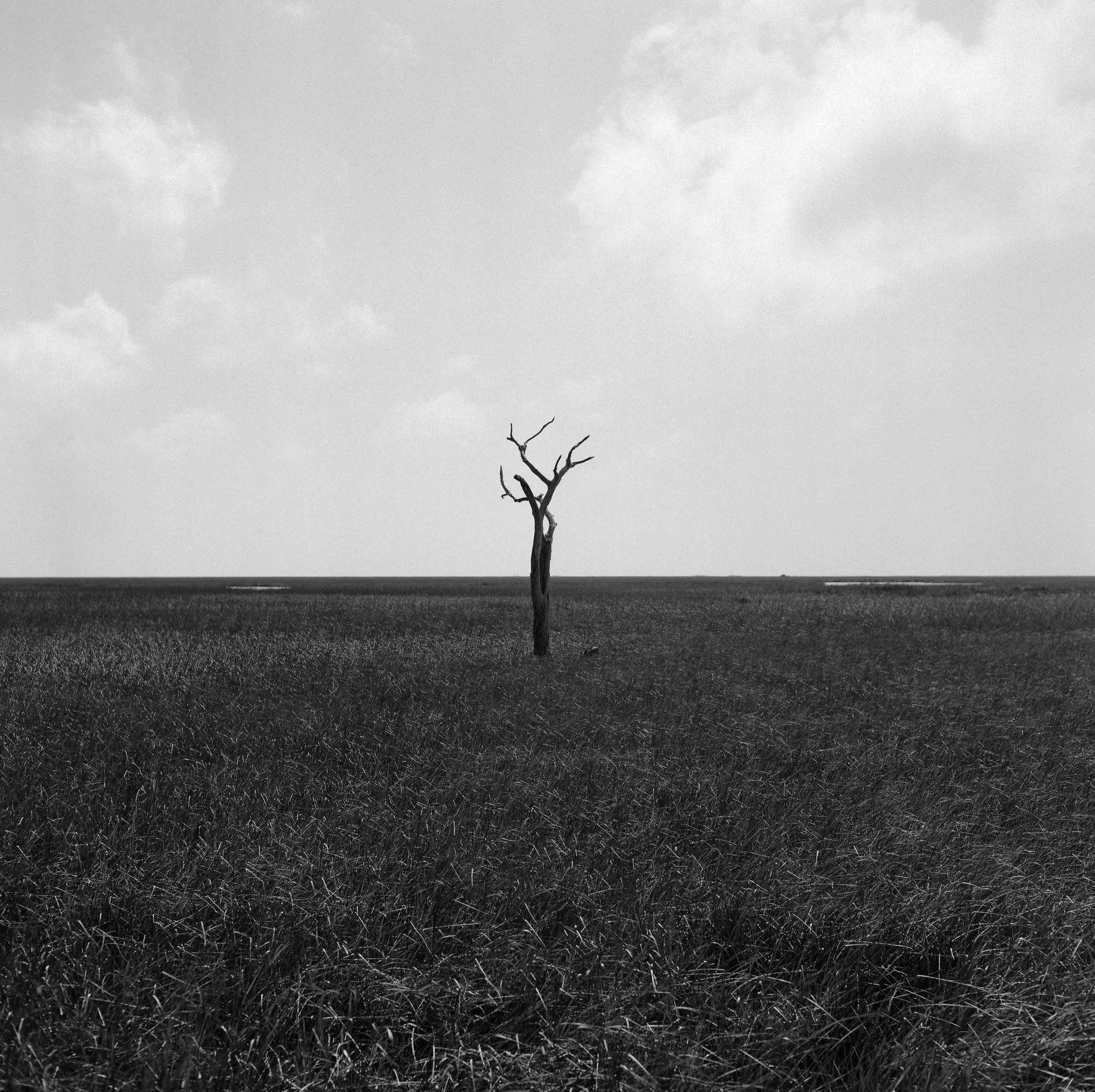
Roger McChargue fulgurite
________________________________________________________________________________________
Roger McChargue lives in Houston, TX, surrounded by plants and animals. You can find more of his work at @r_mcrg. He hopes you enjoy it.