The Shore Interview #59: Shannon K Winston
Questions by Ella Flores, Interview Editor
EF: I hope you’re having a good summer, Shannon, it’s been a pleasure to spend time with your work. I must admit, I wanted to interview you as soon as I first read your poem, “The End of Archives.” For its weighty title, I found it almost painfully brief. I loved how its opening address to the reader ends up implicating the reader as well in the loss the “I” is elegizing. Fittingly, it sent me through our own archives where I found your piece, “Mustard Seed,” in our Issue 12. Even with its stricter pantoum form, I saw a shared stake running across the two: how our sense of self gets entangled with art and, more specifically, with the page. “The End of Archives” ends in ruin, with the “I” picking up “a broken pencil // from under the rubble,” pointing to the difference between “brick and mortar” archives, (as opposed to digital or the theoretical “the archive”). Can you share what you feel you’ve gained from physical interactions with the written word and has that sparked different inspiration, connections, contrasts to you as a poet?
SKW: I find myself increasingly nostalgic for physical books and archives, which is what inspired my poem. Feeling books, smelling them and registering the weight of the pages—these are all integral parts of the reading process to me. I love seeing the stains, winkled pages and faint pencil margins in the books I read. For me, reading is such an imaginative process where meaning unfolds but I’m not talking only about the actual words or plot: I’m also talking about how those narratives unfold alongside the materiality of the book. I also find that I remember more about books if I have a physical copy in my hands. When reading on a screen or engaging with a digital archive, I find that my eyes glaze over a bit and I’m less likely to remember what I’ve read, or I remember it more generally and abstractly. I’m also more likely to scroll, get distracted by what I see online. Engaging with physical books seems vital to me, especially now, when I find it’s easy to forego quiet moments of reading and contemplation.
I’ll also add that during and after graduate school, I was lucky enough to spend a little time (just a few days) in both the Yale Beineke Library and the Princeton University Archives. I was fascinated by the physical process of entering an archive. After putting my stuff in a locker, I had to wash my hands, which I equated with a ritual of sorts. Then I started thinking about how many people (including the author, at times!) had touched that very same book! It’s kind of a surreal, magical thing when you think about it.
EF: I was thrilled to find links to recordings of you reading pieces on your website. To you, what’s the difference between a serviceable reading and a great reading? More than just avoiding “poet voice,” are readings for you more akin to musical artists “finding” the song when performing it live, or is it a separate thing entirely? Has a reading of your poem in front of an audience ever changed the way you understood that poem than on paper?
SKW: I’ve really come to appreciate reading my poems aloud as an act of communication and connection with my audience(s). I used to be quite shy about reading my poems because I was afraid that I’d stumble over a word, or the poem wouldn’t sound as strong as it did in my head. The minute I started feeling the cadence of the lines I was reading, I had a newfound appreciation for the musicality of a poem. And it’s always fascinating to see how the audience reacts in real time.
EF: With several poetry collections now under your belt, from Threads Give Way in 2010 to your recent The Worry Dolls in 2025, I’d like to open this question up to you as both a poet and educator with a comparative literature background: how might you approach teaching the poetry manuscript for poets at the arrangement stage? Are there any poetry books that immediately come to mind for different lessons? Has the structural language for a manuscript changed for you since your first book? On the literary landscape, have you observed the poetry manuscript going in directions you find productive, or are there directions you wish to see it evolve in?
SKW: Ordering a manuscript is hard. Each time I put a manuscript together, I struggle with the arrangement of the poems because I’m so close to them and it’s a ‘forest versus the trees’ problem. When I was putting together The Girl Who Talked to Paintings (2021), my MFA mentor, Matthew Olzmann, encouraged me to read Ordering the Storm: How to Put Together a Book of Poems, which was helpful because it encouraged me to ask some of the following questions about my manuscript: Is the story I want to tell linear or non-linear? What is the emotional note I want the manuscript to end on? I’d ask similar questions of anyone I was teaching. I also encourage them to think about the relationship between the opening and closing poems, and the relationship between a poem’s last line and the title of the poem that follows. It’s also important to think about a reader’s attention span: how can different poems, when put side by side, create interesting tensions and dynamics that a reader will want to explore further?
While I’m not sure I can speak to the literary landscape, I find that my own relationship to ordering a manuscript is changing. I used to think that a manuscript needed to have sections or, I should clarify, it was hard for me to imagine one of my own manuscripts without them. For both The Girl Who Talked to Paintings and The Worry Dolls, I also titled the sections to be explicit about the arc of the story I wanted to tell. I love Laura Kasischke’s The Infinitesimals because each section in that book has stellar titles (i.e. “At the End of the Text, a Small Bestial Form”) that guides the reader’s experience.
However, I recently assembled a manuscript—of which “The End of Archives” is the opening poem—where I have no sections at all. This is both new and exciting for me. I realized, however, in trying to add sections that they seemed somewhat artificial and imposed. My hope is that a more braided structure shows the many entangled themes of the collection. I’m currently rereading Rick Barot’s The Galleons and am really appreciating his collection that also doesn’t have sections.
So, if I had a wish for the literary landscape, it’s to embrace different ways of putting together a collection. My newest collection uses different forms (there are triolets, an abecedarian, a contrapuntal and several footnote poems) and it was fun to see how different forms speak to one another when placed side by side. I love playing with varied poetic forms and play, for me, is also crucial when arranging a manuscript.
EF: Are there any journals or magazines you're currently enjoying?
SKW: There are so many! Aside from The Shore, of course, I love The Adroit Journal, Rust & Moth, RHINO Poetry, West Branch, West Trestle Review, Beloit Poetry Journal, Radar Poetry, Pinch, Sixth Finch, Four Way Review, Public School Poetry and Thimble, just to name a few.
EF: Please speak to how two poems in this issue of The Shore (not including your own) are in conversation with each other.
SKW: I loved reading Julie Marie Wade’s “Grief as Troposphere” alongside Kristen Lee’s “Whaling” because of the way these two poems engage with the imagination. In Wade’s poem, the poem opens:
I imagine mountain-
climbers must feel this way
when they reach the rare-
fied air near the summit.
From the first line, Wade uses the word “imagine” to launch a contemplation of mountain climbing, which becomes an extended metaphor for grief. Particularly remarkable is how Wade’s speaker immerses herself in the world of the climbers to understand her own grief. The troposphere is the lowest layer of the earth atmosphere and Wade’s poem is likewise layered: there is the speaker and her imagination, the hikers and their trek, and the ways in which these two worlds converge to shed light on grief.
I found Lee’s “Whaling” poem equally compelling and layered in its immersion into the embodied perspective of a whale. While Wade uses the word “imagine” as a point of departure, Lee’s speaker immediately assumes the point of view of the whale. Much like Wade draws on details of the hiker’s trek, Lee puts herself in the position of the whale being hunted. Here are some of my favorite lines because they capture the up-close intimacy of the whale’s experience:
My candlewick spine
blackens, open skin
tarnishing like a child’s
wish.
What can others’ experiences tell us about ourselves and our surroundings? I feel as though this is ultimately a question both poems pose as they navigate, albeit in different ways, what it means to inhabit and survive in this world.
________________________________________________________________________________________
Shannon K Winston is the author of The Worry Dolls (Glass Lyre Press, 2025) and The Girl Who Talked to Paintings (Glass Lyre Press, 2021). Her individual poems have appeared in Cider Press Review, Radar Poetry, RHINO Poetry, SWWIM Every Day, West Trestle Review and elsewhere. Find her here: shannonkwinston.com
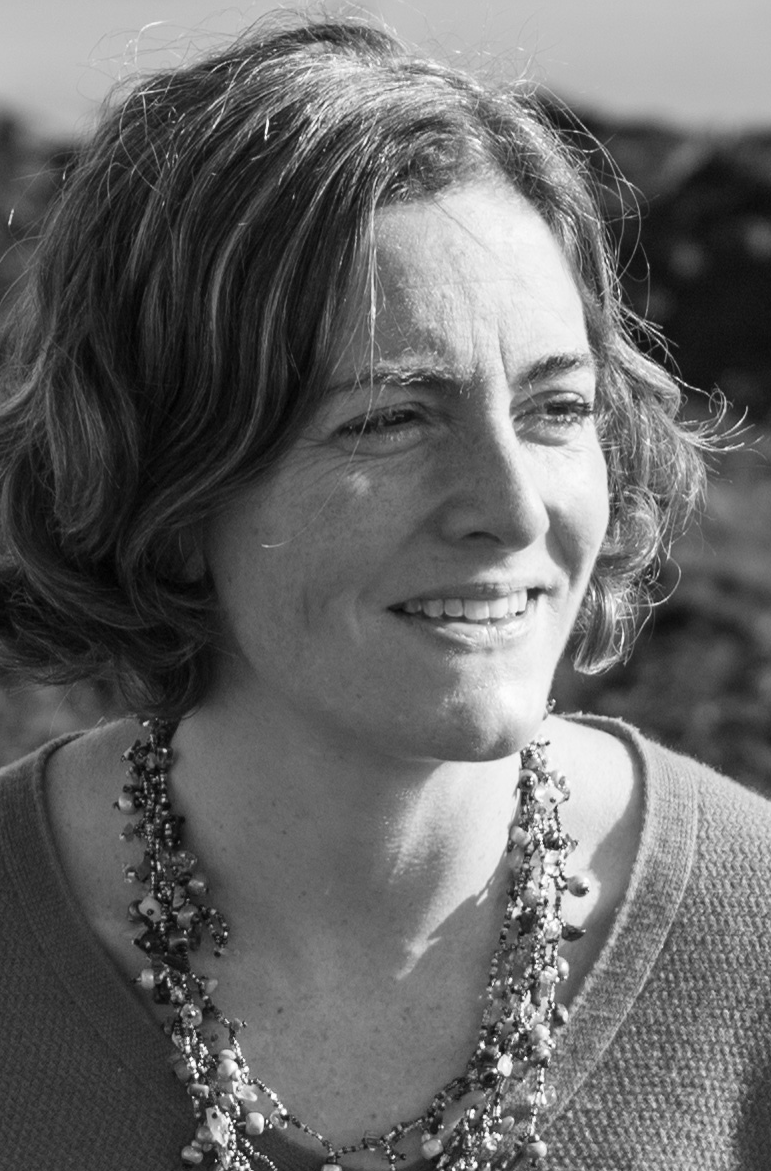
Shannon K Winston